
Email marketing consistently delivers one of the highest returns on investment for small businesses, but selecting the right platform is a critical first step. With a flood of options on the market, each promising to grow your audience and revenue, it’s easy to feel paralyzed by choice. How do you find a tool that aligns with your specific budget, technical comfort level, and long-term business goals?
This guide is designed to cut through the marketing noise and provide clear, practical insights. We’ve done the heavy lifting to review, test, and compare the 12 best email marketing software for small business owners today. We’ll go far beyond generic feature lists, diving deep into what it’s actually like to use these platforms. Understanding the fundamentals is key; if you need a refresher, check out these 5 reasons why email marketing is important before you begin.
For each of the 12 tools covered—including Mailchimp, ConvertKit, Klaviyo, and HubSpot—we provide a comprehensive breakdown. You will find:
- Honest pros and cons based on real-world use.
- Detailed pricing tiers to help you budget effectively.
- Practical use-case scenarios for different business types (e.g., e-commerce, creators, local services).
- Actionable takeaways and screenshots to guide your setup.
Our goal is simple: to equip you with the detailed information needed to make a confident, strategic decision. Whether you're launching your first newsletter or migrating from an existing provider, you'll find a recommendation here to help turn your email list into a powerful growth engine.
1. Mailchimp
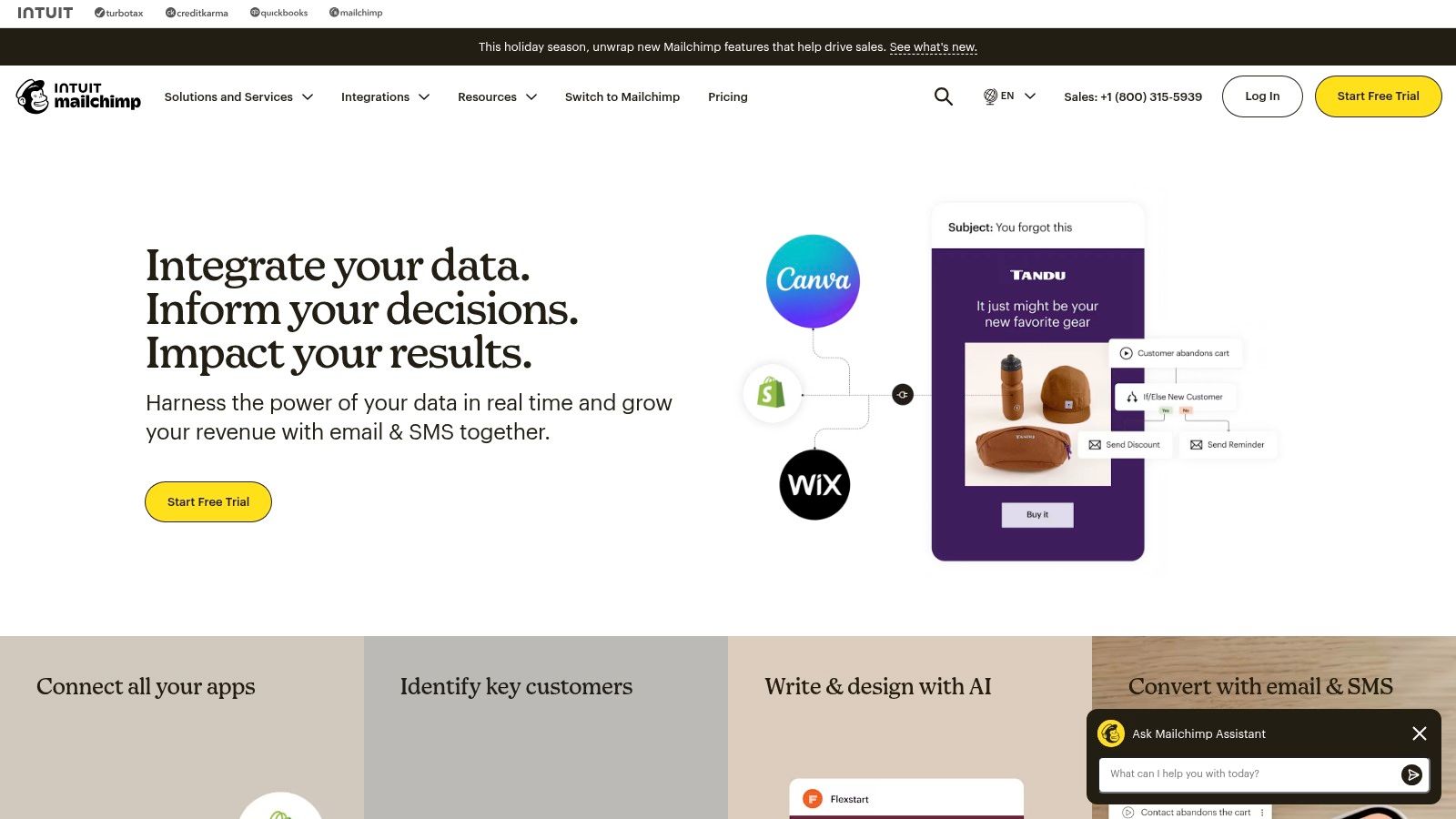
Mailchimp is often the first platform that comes to mind when discussing email marketing, and for good reason. Its intuitive interface and robust free plan make it an ideal starting point for new businesses. The drag-and-drop builder, coupled with over 100 professionally designed templates, significantly lowers the barrier to creating beautiful, effective campaigns without any coding knowledge. This focus on ease of use makes it one of the best email marketing software for small business owners just starting out.
Key Features & Use Cases
What sets Mailchimp apart is its scalability. A small business can begin with simple newsletters and, as it grows, tap into sophisticated features like the Customer Journey Builder for multi-step automations. This tool allows you to create workflows that send emails based on user behavior, such as a welcome series for new subscribers or abandoned cart reminders for ecommerce stores. For those just beginning to build an audience, Mailchimp offers excellent landing page and form builders. If you want to dive deeper into audience growth, explore these practical tips for building an email list from scratch.
Pricing & Scalability
Mailchimp’s pricing structure is designed to grow with your business.
- Free Plan: Up to 500 contacts and 1,000 sends per month.
- Essentials: Starts at $13/month for 500 contacts.
- Standard: Starts at $20/month for 500 contacts, unlocking advanced automation and optimization tools.
- Premium: Advanced segmentation and testing for larger teams.
A unique offering is the Pay-As-You-Go plan, where you buy credits. This is perfect for seasonal businesses or infrequent senders who don't need a monthly subscription. However, be mindful that overage fees on standard plans can accumulate if your list grows unexpectedly.
2. Constant Contact
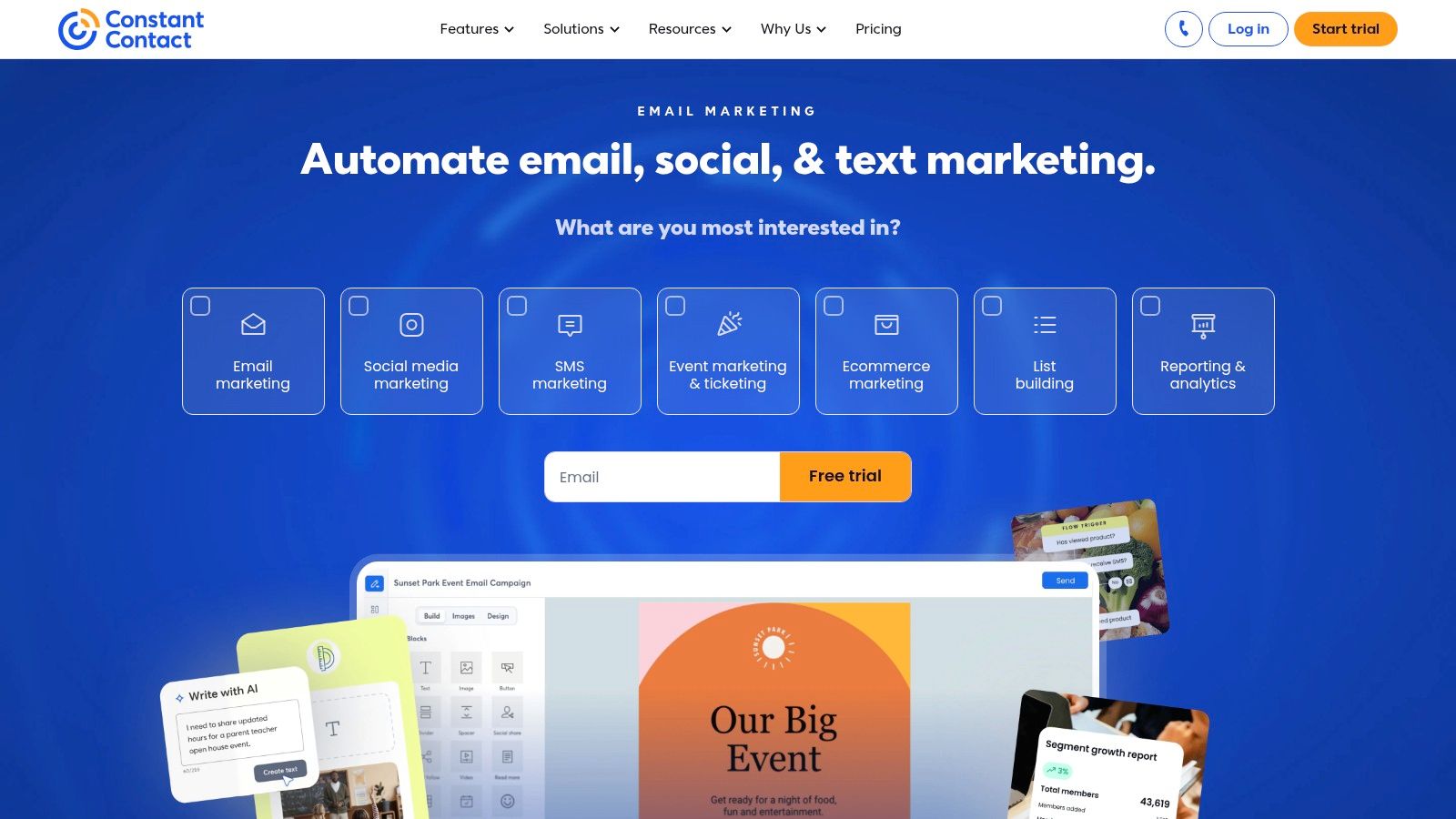
Constant Contact has been a trusted name in the industry for decades, specifically catering to the needs of small businesses with its all-in-one digital marketing suite. Its strength lies in its user-friendliness and exceptional customer support, making it an excellent choice for entrepreneurs who may not be tech-savvy. The platform provides a guided onboarding experience and straightforward tools, which simplifies the process of creating professional-looking emails and managing contacts from day one.
Key Features & Use Cases
Beyond standard email campaigns, Constant Contact excels with integrated tools for event marketing, surveys, and social posting, allowing businesses to manage multiple channels from one dashboard. Its AI Content Generator helps overcome writer's block by suggesting subject lines and email copy. A standout feature is the ability to sell products or digital goods directly through emails and landing pages. For businesses looking to optimize their approach, it’s beneficial to explore some of the best email marketing strategies to leverage these tools effectively.
Pricing & Scalability
Constant Contact offers a simple pricing model based on the number of contacts.
- Lite: Starts at $12/month for up to 500 contacts, ideal for basic email sending.
- Standard: Starts at $35/month for 500 contacts, adding automation and A/B testing.
- Premium: Starts at $80/month for 500 contacts, unlocking advanced segmentation, SEO tools, and included SMS credits.
A key benefit is the 30-day money-back guarantee on new plans, allowing you to test the platform risk-free. However, be aware that email send limits are tied to your contact tier (e.g., 10x your contact limit on Standard), which could be a constraint for frequent senders.
3. Brevo (formerly Sendinblue)
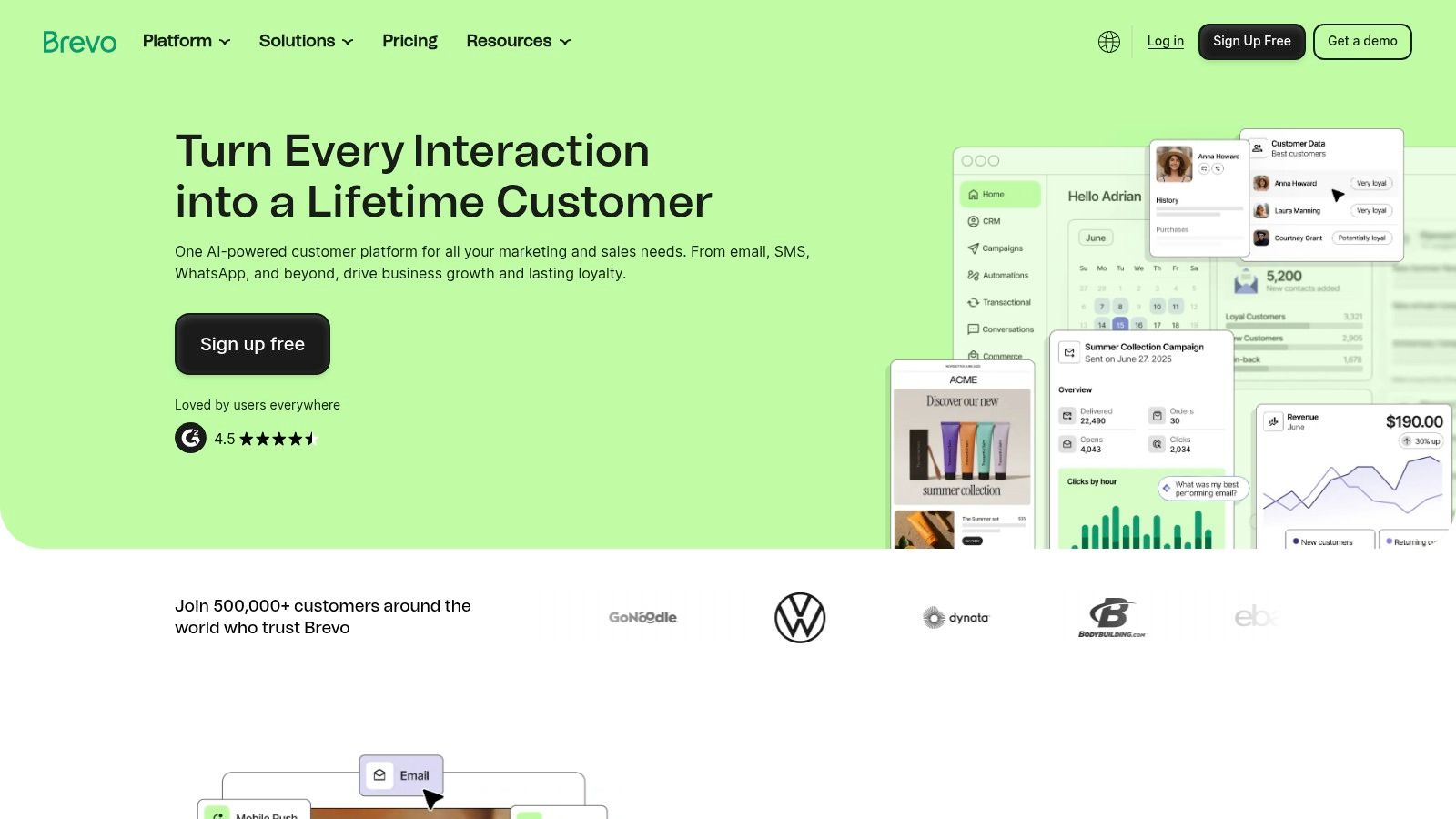
Brevo stands out as a comprehensive, all-in-one marketing suite, extending far beyond traditional email campaigns. It positions itself as a powerful alternative for businesses seeking an affordable platform that combines email marketing with SMS, WhatsApp, live chat, and a built-in CRM. This multichannel approach makes it one of the best email marketing software for small business owners who want to centralize customer communication without juggling multiple tools. Its unique pricing model, based on email volume rather than contact list size, is a significant advantage for businesses with large but less frequently engaged audiences.
Key Features & Use Cases
Brevo excels at unifying marketing and sales workflows. A small ecommerce shop can use it to send promotional emails, follow up with abandoned cart SMS reminders, and manage customer queries via live chat, all from a single dashboard. Its automation builder is robust, allowing for complex, multi-channel sequences triggered by user behavior. For service-based businesses, the built-in CRM and landing page builder are perfect for lead generation and management. Brevo's send-time optimization also analyzes recipient engagement to deliver messages at the ideal moment, a key factor you can explore further with these tips on how to improve email deliverability.
Pricing & Scalability
Brevo’s volume-based pricing is its defining feature, making it highly scalable for list growth.
- Free Plan: Up to 300 emails per day with unlimited contacts.
- Starter: Starts at $25/month for 20,000 emails/month, removing daily limits.
- Business: Starts at $65/month, adding marketing automation, A/B testing, and landing pages.
- Brevo Plus: Custom pricing for advanced enterprise needs.
This model is particularly cost-effective if you have a large contact list but send campaigns less frequently. However, be aware that key features like advanced automation are only available on the higher-tiered Business plan, which represents a notable price increase from the Starter tier.
4. MailerLite
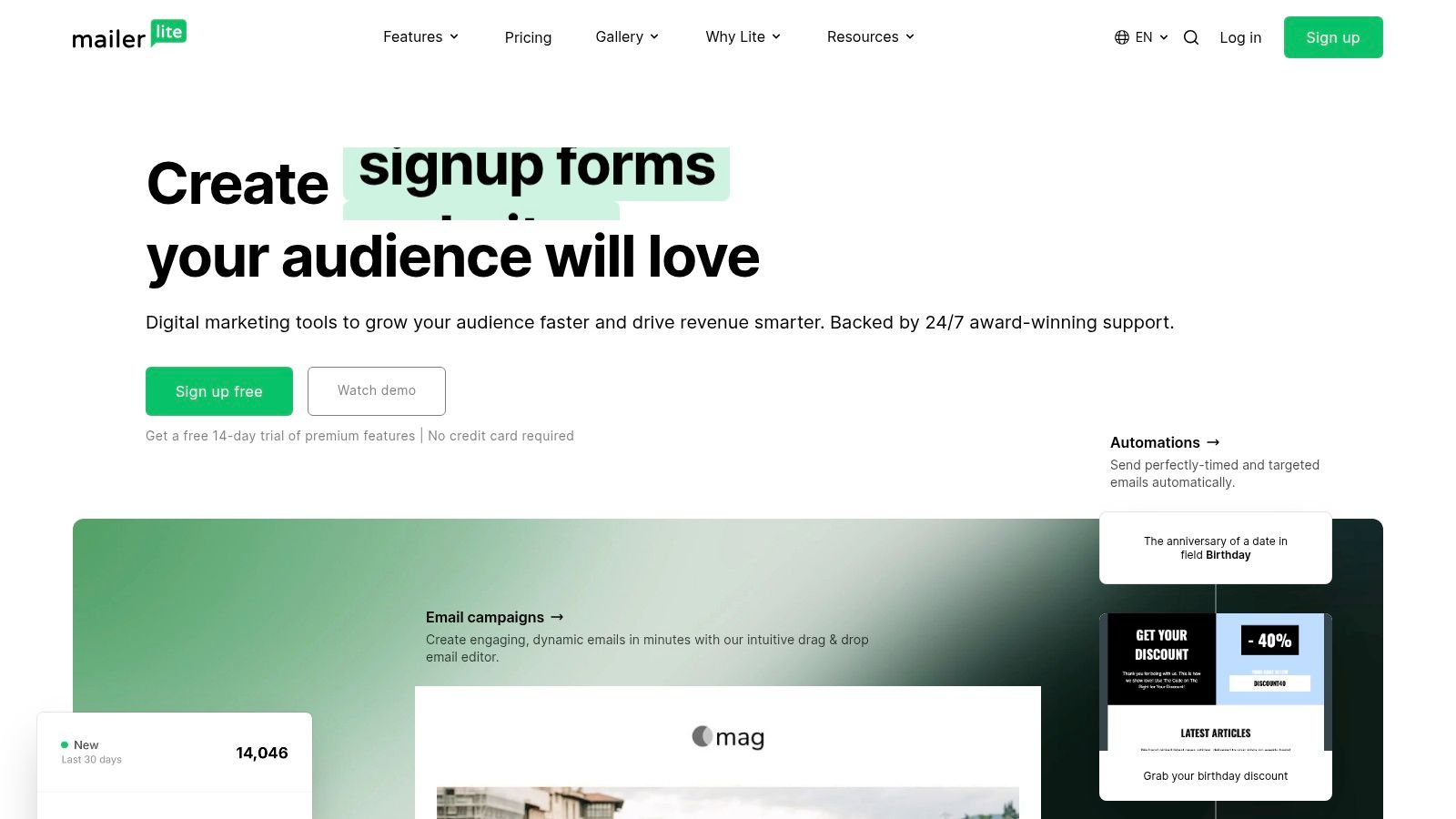
MailerLite excels by combining a clean, modern interface with a powerful suite of tools that go beyond basic email. It’s particularly appealing to startups and creators who need more than just a newsletter tool, offering built-in features for creating websites, landing pages, and even selling digital products. This all-in-one approach makes it a standout choice for lean teams looking for the best email marketing software for small business without a hefty price tag.
Key Features & Use Cases
What makes MailerLite special is its focus on providing a complete marketing toolkit. A solopreneur can use the drag-and-drop editor to design a campaign, then build a matching landing page to capture leads, and finally set up an automated welcome sequence to nurture them. More advanced features like dynamic content blocks allow you to personalize emails for different audience segments within a single campaign, showing specific offers to subscribers based on their interests or purchase history. For those on paid plans, multivariate testing helps optimize campaigns by testing up to five variations of an email at once.
Pricing & Scalability
MailerLite’s pricing is transparent and highly competitive, making it accessible for businesses on a tight budget.
- Free Plan: Up to 500 contacts and 12,000 sends per month.
- Growing Business: Starts at $10/month for 500 contacts, adding features like selling digital products.
- Advanced: Starts at $20/month for 500 contacts, unlocking promotion pop-ups and multiple automation triggers.
The free plan’s high monthly send limit (12,000) is one of its most generous features, though the contact limit was recently updated to 500. This structure is ideal for businesses that send frequent updates to a smaller, engaged list. As your list and needs grow, the paid tiers remain affordable while unlocking more powerful marketing capabilities.
5. ConvertKit
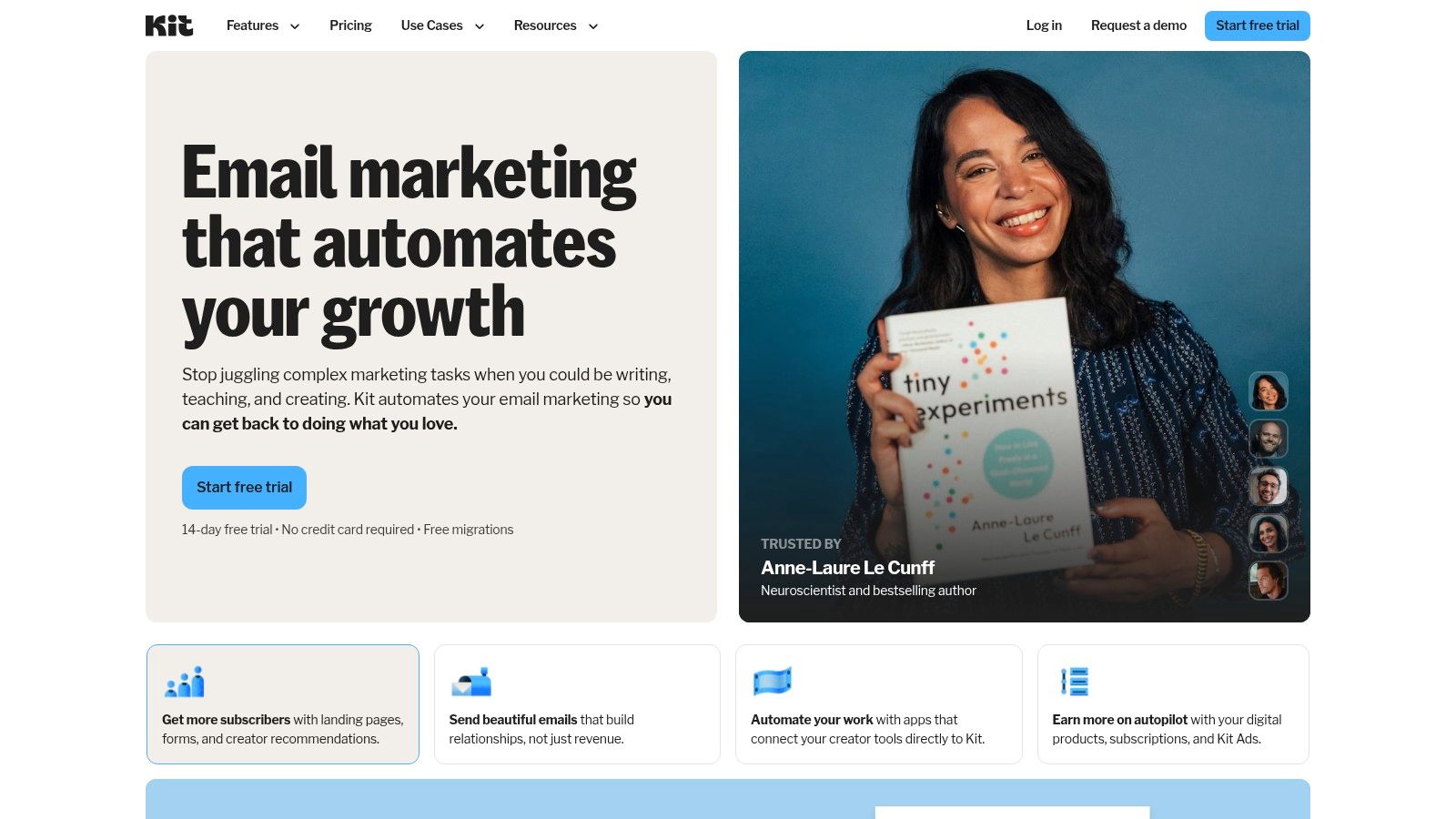
ConvertKit is a creator-centric platform built specifically for writers, coaches, and solo founders. It strips away the complexity of traditional email marketing to focus on what matters most to creators: building an audience and monetizing their expertise. The platform excels at selling digital products and managing paid newsletters, making it a powerful tool for turning a following into a business. Its straightforward approach makes it one of the best email marketing software for small business owners in the creator economy.
Key Features & Use Cases
What truly sets ConvertKit apart is its seamless integration of commerce and email. You can sell digital products or subscriptions directly from landing pages and emails without needing a separate e-commerce platform. Its Visual Automations builder is intuitive, allowing you to create automated funnels that tag and segment subscribers based on their actions, such as clicking a link or purchasing a product. This is ideal for delivering targeted content sequences, like a free email course that leads to a paid product offering. The platform also offers free migrations to help you switch over with ease.
Pricing & Scalability
ConvertKit's pricing model is designed to support creators as they build their audience.
- Free Plan: Up to 1,000 subscribers with unlimited landing pages and broadcasts.
- Creator: Starts at $9/month for 300 subscribers, adding automated sequences and free migrations.
- Creator Pro: Starts at $25/month for 300 subscribers, unlocking advanced features like a subscriber referral system, advanced reporting, and A/B testing for subject lines.
The free plan is generous and provides a solid foundation for new creators. However, to access the powerful automation features that make ConvertKit shine, you will need to upgrade to a paid plan. The Creator Pro plan is a significant step up, tailored for established creators ready to optimize and scale their revenue.
6. AWeber
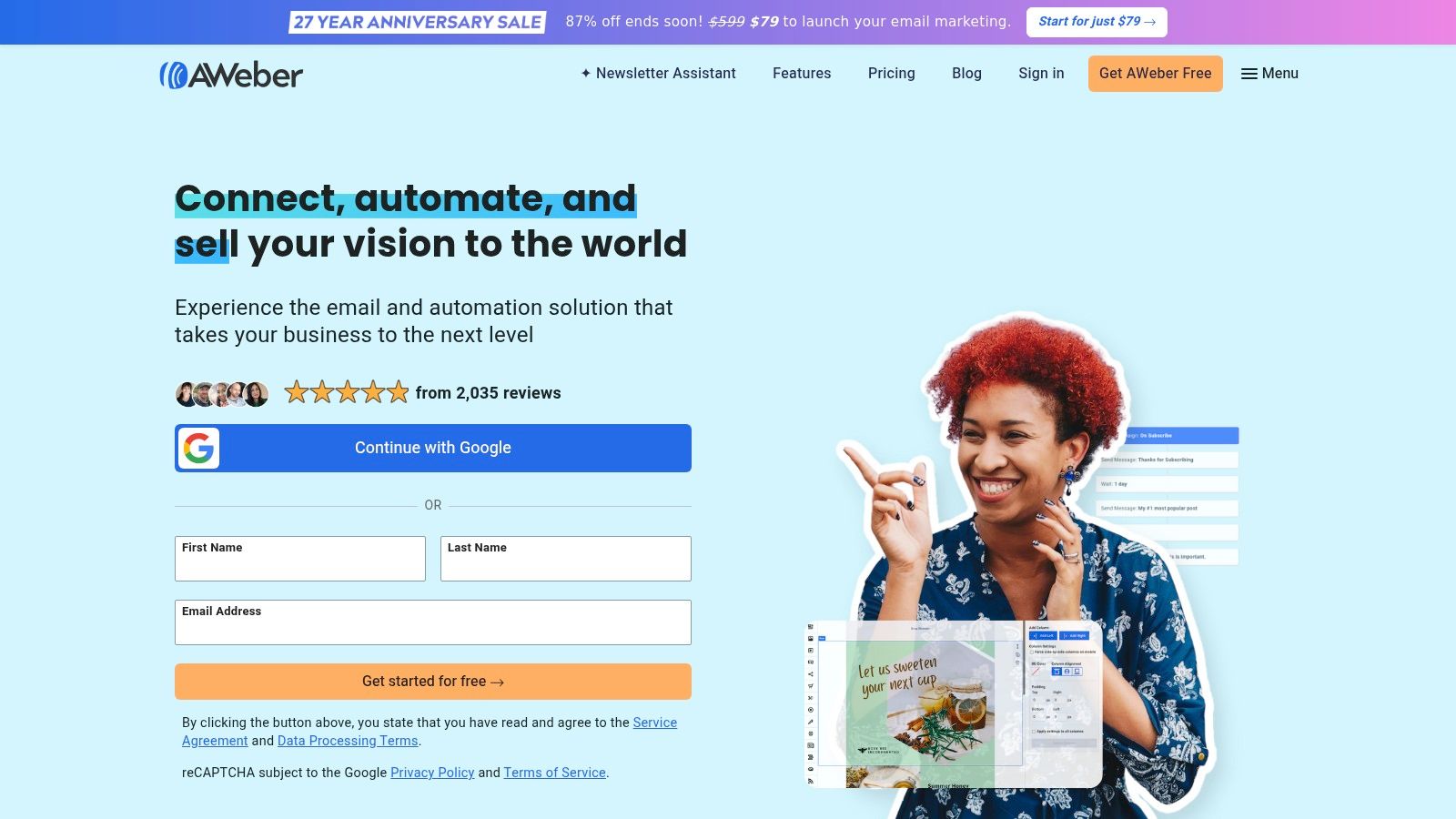
AWeber is one of the original players in the email marketing space, known for its strong focus on deliverability and reliability. With over two decades of experience, it has honed its platform to provide small businesses with a straightforward, dependable solution. Its combination of user-friendly automation, a wide array of templates, and accessible customer support makes it a solid contender for entrepreneurs who prioritize consistency and guidance in their email marketing efforts.
Key Features & Use Cases
AWeber excels at simplifying core email marketing tasks. Its automation builder, while not as visually complex as some competitors, is perfect for creating essential workflows like welcome series or educational sequences. The platform also offers robust ecommerce tools, landing pages, and a vast integration library, connecting seamlessly with tools like WordPress, Shopify, and PayPal. For businesses that value direct assistance, AWeber’s highly-regarded US-based support via phone, email, and chat is a significant advantage, making it one of the best email marketing software for small business owners who want a safety net.
Pricing & Scalability
AWeber’s pricing is transparent and tied directly to your subscriber count, which helps with budget forecasting.
- Free Plan: Up to 500 subscribers, 3,000 emails/month, and one list.
- Lite: Starts at $14.99/month for 500 subscribers, including more advanced email automation and basic segmentation.
- Plus: Starts at $29.99/month for 500 subscribers, unlocking advanced reporting, behavioral automation, and removal of AWeber branding.
A key limitation to note is that send limits are based on a multiplier of your subscriber count (e.g., 10x your subscriber limit on the Lite plan), which can be a constraint for businesses that send frequent campaigns to a smaller list.
7. GetResponse
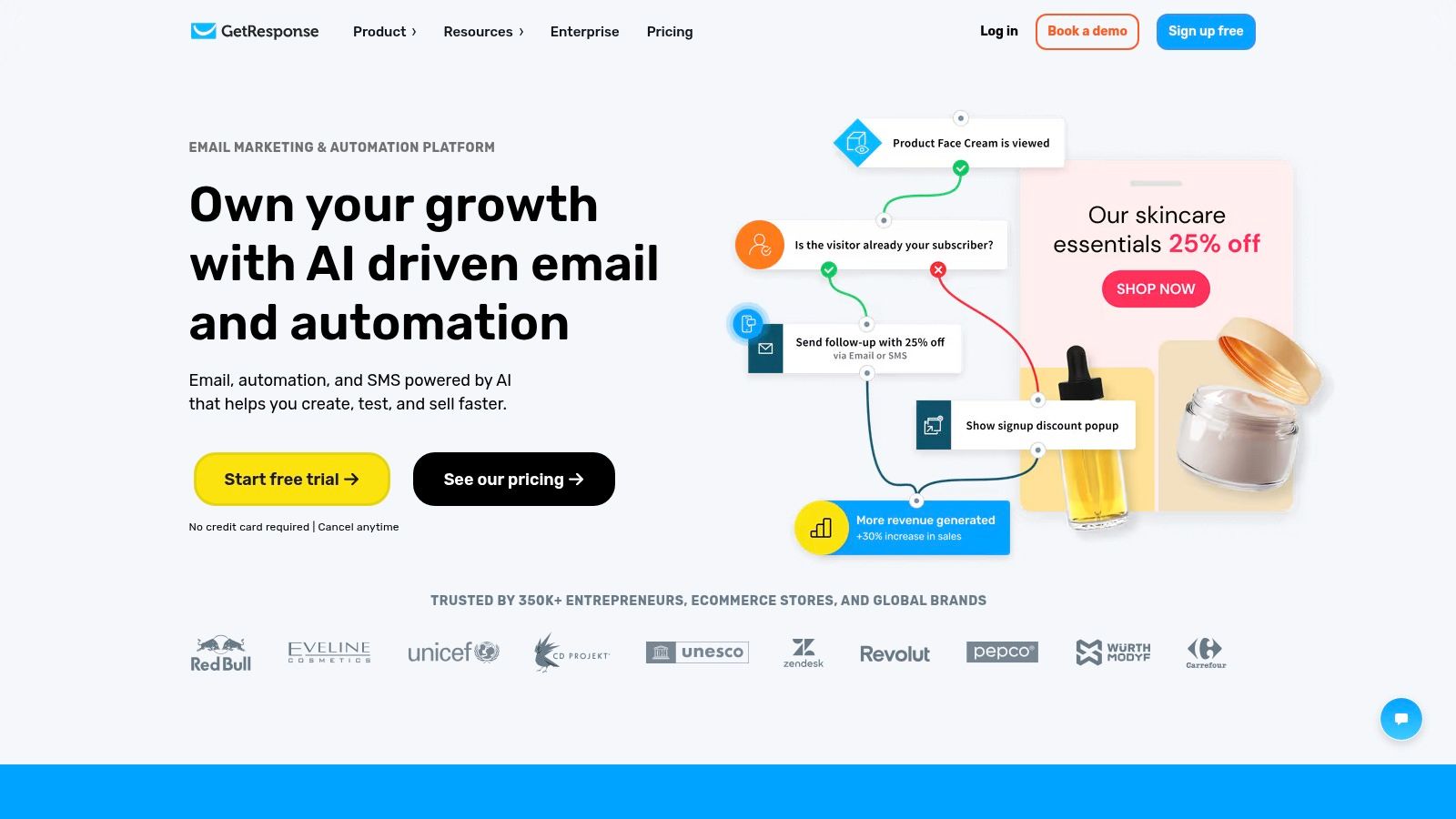
GetResponse positions itself as more than just an email tool; it's an all-in-one marketing platform designed for growth. For small businesses that want to consolidate their marketing stack, it combines email marketing with conversion funnels, landing pages, webinars, and even website-building capabilities. This comprehensive approach means you can manage multiple facets of your marketing from a single dashboard, making it a powerful contender for the best email marketing software for small business owners seeking efficiency.
Key Features & Use Cases
The standout feature of GetResponse is its suite of inbound marketing tools. You can create a complete customer journey, starting from a pop-up form on your site, leading to a landing page, and then nurturing subscribers through an automated email sequence. Its built-in webinar hosting is a unique selling point, allowing service-based businesses or coaches to engage their audience directly without needing a separate tool like Zoom. For ecommerce, the platform offers features like abandoned cart emails and product recommendations.
Pricing & Scalability
GetResponse offers competitive pricing, especially considering its broad feature set.
- Free Plan: Up to 500 contacts and 2,500 newsletters per month.
- Email Marketing: Starts at $19/month for 1,000 contacts, with unlimited sends.
- Marketing Automation: Starts at $59/month for 1,000 contacts, unlocking advanced workflows, webinars, and funnels.
- Ecommerce Marketing: Starts at $119/month for 1,000 contacts, adding ecommerce segmentation and promo codes.
While the feature breadth is a major pro, it can introduce a learning curve for beginners. Additionally, direct phone support is reserved for the highest-tier plans, which might be a drawback for those who prefer immediate assistance.
8. ActiveCampaign
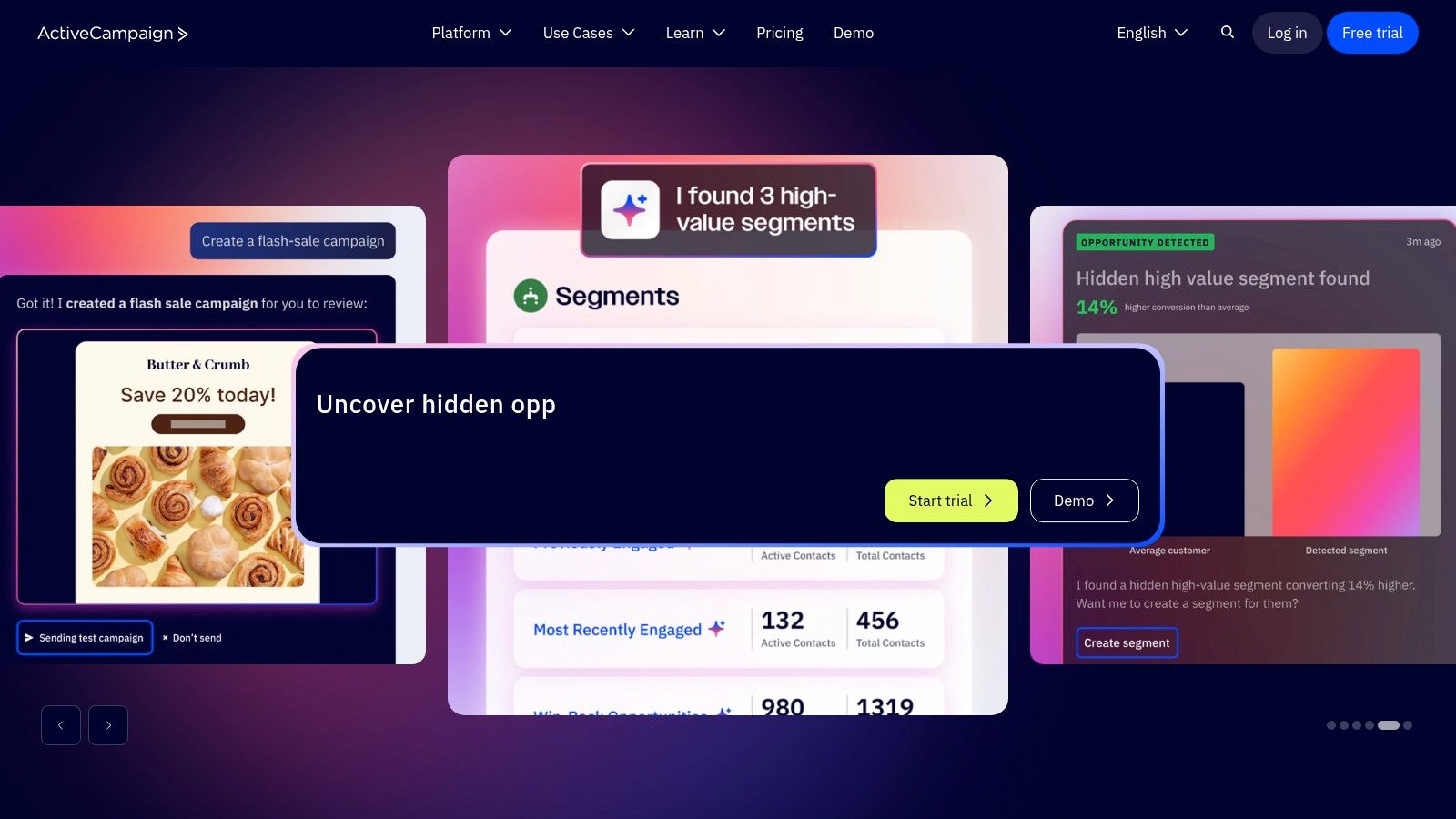
ActiveCampaign transcends simple email broadcasting, positioning itself as a comprehensive customer experience automation platform. It merges email marketing, marketing automation, and a built-in CRM, making it a powerful choice for businesses that need to align their sales and marketing efforts. Its visual automation builder is a standout feature, allowing users to map out complex customer journeys with conditional logic, website tracking, and lead scoring. This integrated approach makes it one of the best email marketing software for small business owners focused on scaling through sophisticated lifecycle marketing.
Key Features & Use Cases
What truly sets ActiveCampaign apart is its deep automation capabilities. Beyond standard email sequences, you can create workflows that integrate SMS, update CRM deals, and assign tasks to sales team members based on a contact's actions. For example, a new lead can enter a welcome series, and if they click on a specific product link, they can be tagged and moved into a targeted sales automation. Its built-in CRM is ideal for service-based businesses or B2B companies wanting to manage leads without a separate, expensive system. The platform also offers site messaging and landing pages to create a cohesive user experience.
Pricing & Scalability
ActiveCampaign’s pricing is contact-based and tiered, encouraging a move toward more advanced features. While some plans require a quote, their entry-level options are transparent.
- Marketing Lite: Starts at $29/month for 1,000 contacts, includes basic automation.
- Marketing Plus: Starts at $49/month for 1,000 contacts, adding ecommerce and landing pages.
- Marketing Professional: Starts at $149/month for 1,000 contacts, with predictive sending and split automations.
- Enterprise: Custom pricing for advanced reporting and dedicated support.
The platform can feel complex for absolute beginners due to its extensive feature set. However, for a growing business ready to invest in serious automation that drives sales and nurtures leads effectively, the power it provides is difficult to match.
9. Klaviyo
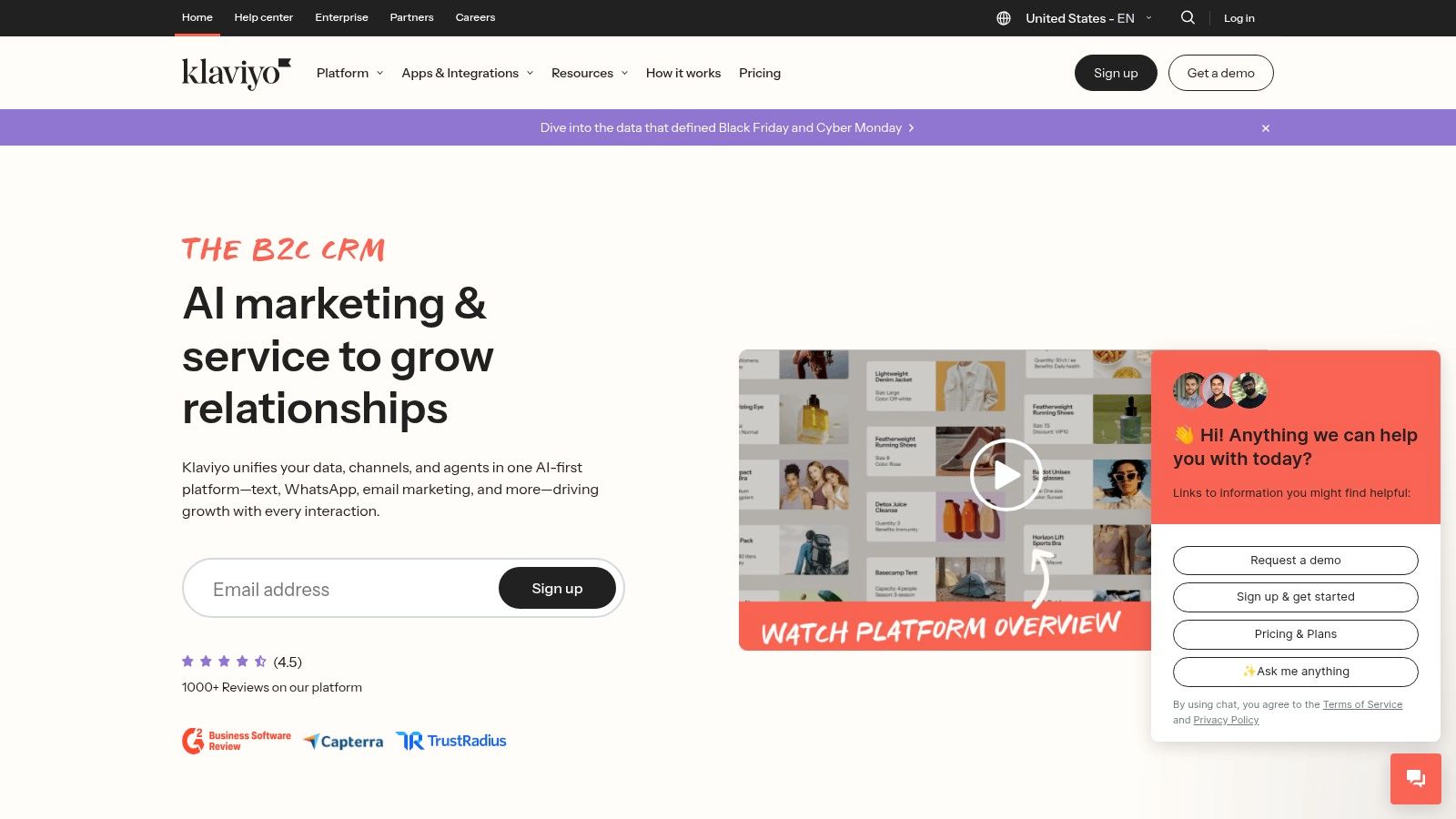
Klaviyo is an ecommerce-first marketing automation platform designed specifically for direct-to-consumer (DTC) brands aiming to drive revenue. Its strength lies in its deep integration with platforms like Shopify and BigCommerce, allowing it to leverage a wealth of customer data for highly targeted campaigns. This focus on commerce makes it a powerful contender for the best email marketing software for small business owners who sell products online and want to turn customer behavior into sales.
Key Features & Use Cases
Klaviyo excels at activating ecommerce data for profit-driven automation. You can build segments based on granular criteria like purchase history, browsing behavior, average order value, and even predictive analytics like churn risk. This allows for hyper-personalized flows such as browse abandonment reminders for specific products, post-purchase upsells, and VIP customer reward campaigns. Its combined email and SMS marketing capabilities provide a unified view of customer communication, making it simple to coordinate messages across channels for maximum impact.
Pricing & Scalability
Klaviyo’s pricing is based on the number of active email and SMS contacts, with costs scaling as your audience grows.
- Free: Up to 250 contacts and 500 email sends.
- Email: Starts at $20/month for up to 500 contacts and 5,000 email sends.
- Email and SMS: Starts at $35/month for up to 500 contacts, combining email sends with SMS credits.
While the platform is a premium choice, its focus on ROI often justifies the cost for growing ecommerce stores. However, businesses should monitor their active profile count closely, as the price can increase significantly with list growth. The model is built to scale with revenue, not just subscribers.
10. Omnisend
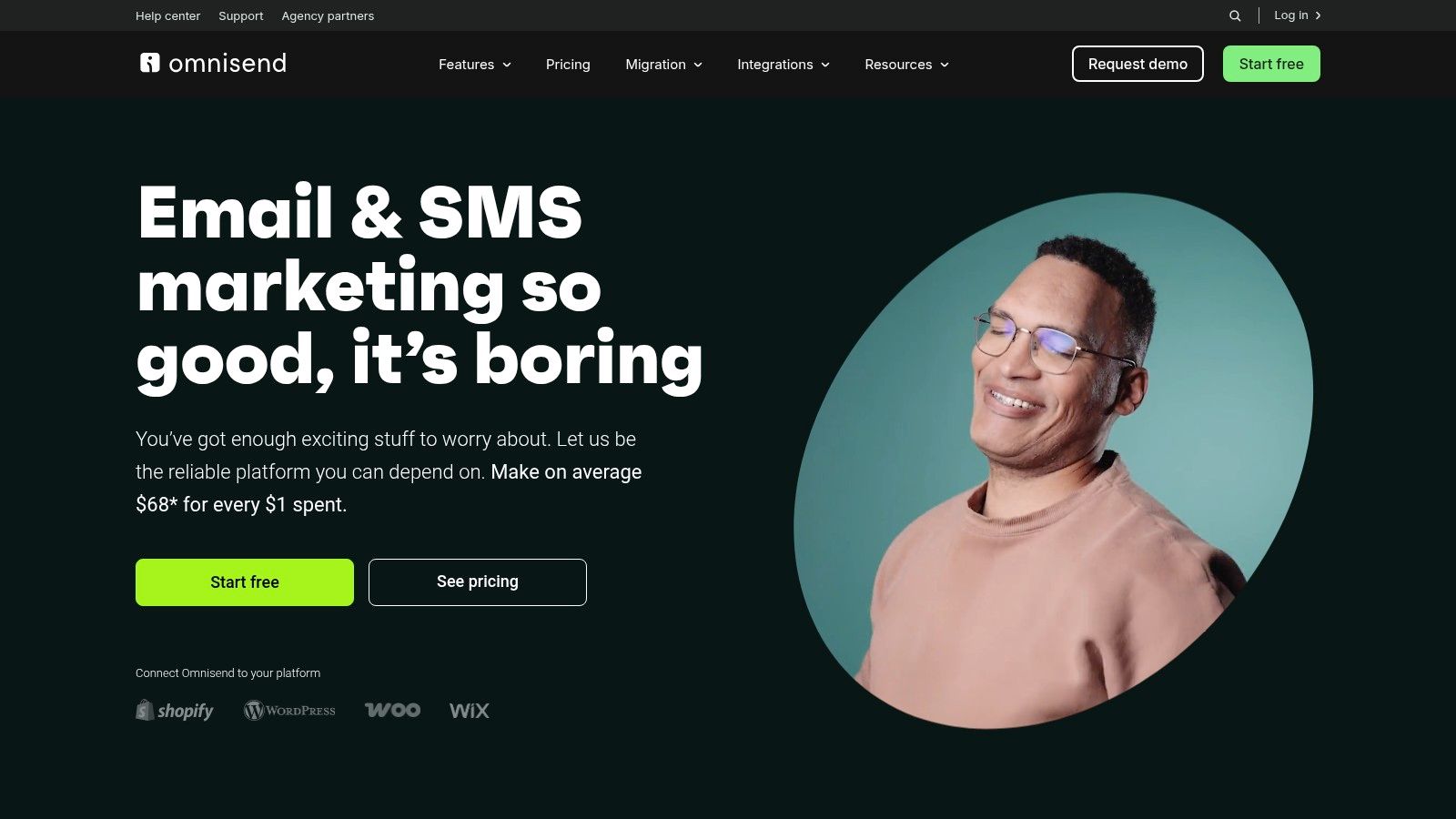
Omnisend is purpose-built for ecommerce stores, moving beyond standard email campaigns to offer a unified marketing automation solution. It combines email, SMS, and web push notifications into a single, cohesive workflow, allowing small businesses to create powerful, multi-channel customer journeys. This integrated approach makes it one of the best email marketing software for small business owners in the ecommerce space looking to automate their sales funnels from a single dashboard.
Key Features & Use Cases
Omnisend’s strength lies in its deep integration with ecommerce platforms like Shopify, BigCommerce, and WooCommerce. This allows for sophisticated automations based on real-time customer data, such as product abandonment, browsing behavior, and purchase history. A standout feature is the Product Recommender, which dynamically inserts relevant products into emails, boosting cross-sell and upsell opportunities. For instance, you can automatically send a follow-up email a week after purchase featuring products complementary to the one the customer bought. You can also build workflows that send an email first, then an SMS message a day later if the customer hasn't engaged.
Pricing & Scalability
Omnisend’s pricing scales with your contact list and feature needs, making it accessible for growing stores.
- Free Plan: Up to 250 contacts and 500 emails per month, including A/B testing and pop-ups.
- Standard: Starts at $16/month for 500 contacts, adding SMS and unlimited web push notifications.
- Pro: Starts at $59/month for 500 contacts, unlocking advanced reporting and a higher SMS credit allowance.
The free plan is generous enough to test core automation features before committing. However, be aware that SMS messages beyond the included credits on paid plans come at an additional cost, which is a crucial consideration when planning your marketing budget.
11. HubSpot (Marketing Hub)
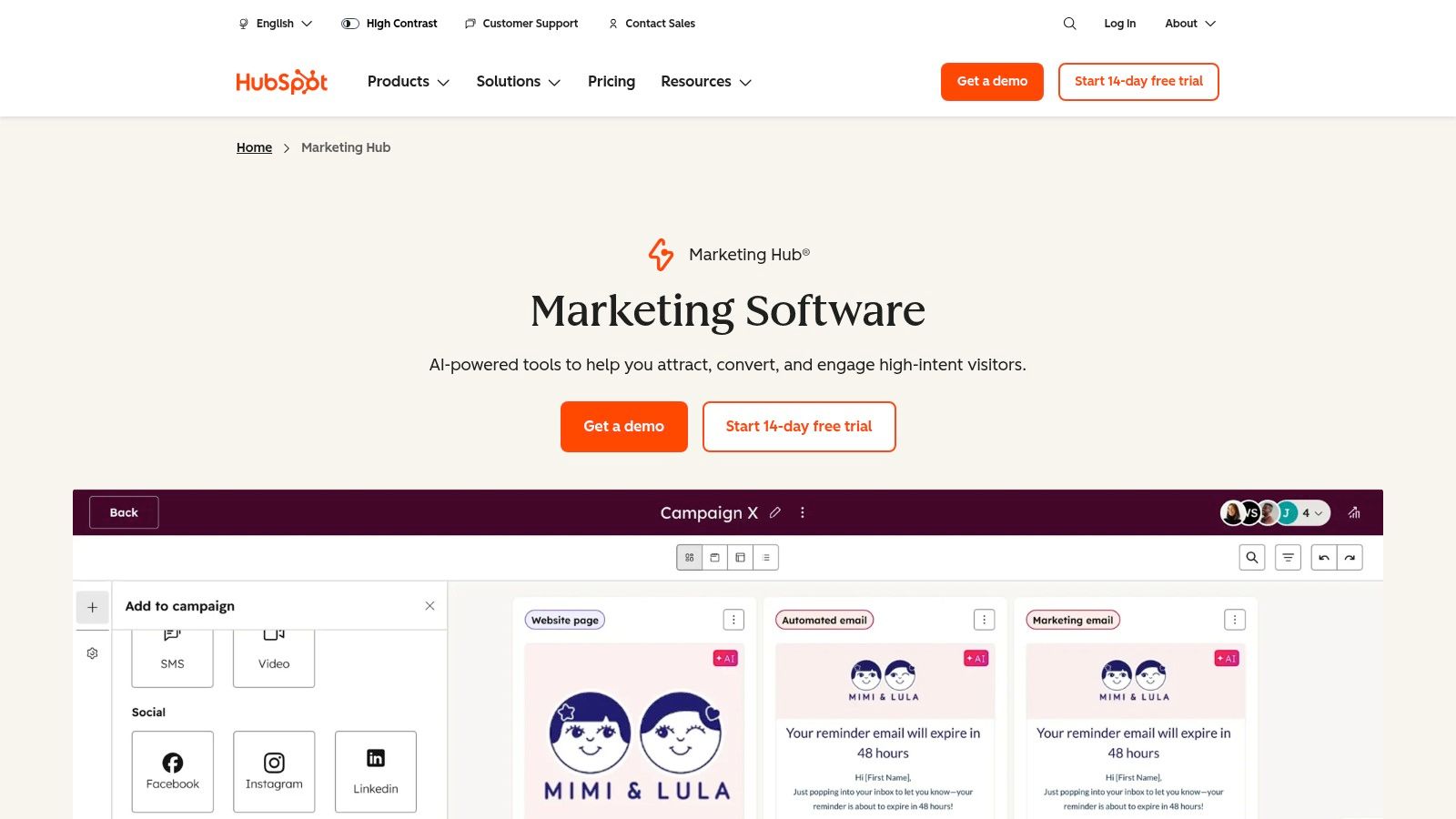
HubSpot extends beyond simple email campaigns, offering a powerful all-in-one CRM platform where marketing, sales, and service tools work together seamlessly. While it can feel like a significant step up from basic email tools, its free offerings provide a remarkable entry point for businesses wanting to unify their customer data. For a small business with plans to scale, adopting HubSpot early can build a solid foundation, making it one of the most comprehensive choices for the best email marketing software for small business growth.
Key Features & Use Cases
The core strength of HubSpot is its deep CRM integration. Every email sent, opened, and clicked is logged directly on a contact's record, giving your sales and service teams a complete view of all interactions. This unified data allows for highly sophisticated automation; for instance, you can trigger an email sequence when a sales lead moves to a new deal stage or a customer submits a support ticket. The platform also includes free tools like forms, landing pages, and live chat to help capture leads directly into your ecosystem.
Pricing & Scalability
HubSpot's pricing is structured to accommodate businesses from startup to enterprise, though costs can increase significantly with contact list growth and premium features.
- Free Tools: Send up to 2,000 emails per month to 1,000,000 contacts, with access to the free CRM, forms, and more (includes HubSpot branding).
- Starter: Starts at $20/month for 1,000 marketing contacts, removing branding and adding more features.
- Professional: Starts at $890/month, unlocking marketing automation, A/B testing, and advanced analytics.
- Enterprise: For large-scale teams needing advanced reporting and permissions.
The free plan is incredibly generous, but be aware that jumping to paid tiers, particularly Professional, represents a substantial financial and strategic commitment.
12. Zoho Campaigns
For businesses already invested in the Zoho ecosystem, Zoho Campaigns is a natural and powerful extension. It integrates seamlessly with Zoho CRM, providing a unified view of customer interactions that transforms email marketing from a standalone activity into a core part of the sales and support process. This tight integration makes it one of the best email marketing software for small business teams looking to streamline their tech stack and leverage existing customer data without complex third-party connectors.
Key Features & Use Cases
Zoho Campaigns excels at creating data-driven campaigns. You can build segments directly from Zoho CRM data, targeting customers based on their lead status, purchase history, or last contact date. Its drag-and-drop workflow builder allows for sophisticated automations, such as sending a follow-up email sequence when a deal stage changes in the CRM. Beyond its CRM integration, the platform offers dynamic content, A/B testing, and even an optional SMS campaign add-on, providing a multi-channel approach to customer engagement.
Pricing & Scalability
Zoho Campaigns is known for its strong value and flexible pricing.
- Forever Free: A generous plan for up to 2,000 contacts and 6,000 emails per month.
- Standard: Starts at $3/month (billed annually) for 500 contacts, adding basic segmentation and workflows.
- Professional: Starts at $4.50/month (billed annually) for 500 contacts, unlocking advanced features like contact scoring and e-commerce marketing automation.
A standout feature is the Pay-As-You-Go option, where you purchase email credits that never expire. This is ideal for businesses with sporadic sending needs or those that want to avoid a monthly subscription. While the UI can feel less polished than some competitors, the value and deep integration with other Zoho apps make it a compelling choice.
Top 12 Email Marketing Platforms Comparison
| Platform | Core features ✨ | Best for 👥 | UX / Deliverability ★ | Pricing & value 💰 | Standout 🏆 |
|---|---|---|---|---|---|
| Mailchimp | ✨ Drag‑drop builder, 100+ templates, automation, e‑commerce, AI tools | 👥 Beginners → scaling SMBs | ★★★★ Easy to start; broad integrations | 💰 Free → tiered; can be costly with overages | 🏆 Ecosystem & templates |
| Constant Contact | ✨ Email, events, social integrations, automation, AI suggestions | 👥 Small businesses needing support | ★★★★ Straightforward onboarding & support | 💰 Simple plans; send caps by contacts | 🏆 Hands‑on onboarding & advisors |
| Brevo (Sendinblue) | ✨ Email/SMS/WhatsApp, automation, web push, CRM‑lite | 👥 Large lists & multichannel marketers | ★★★ Cost‑effective but pro tier jumps | 💰 Volume‑based; good for low‑frequency large lists | 🏆 Multichannel + volume pricing |
| MailerLite | ✨ Drag‑drop, automations, websites/landing pages, digital sales | 👥 Startups & lean teams | ★★★★ Modern, very easy to use | 💰 Budget‑friendly; generous free send allowance | 🏆 Affordable + simple landing pages |
| ConvertKit (Kit) | ✨ Visual automations, paid newsletters, commerce, tagging | 👥 Creators, writers, solo founders | ★★★★ Creator‑focused, simple flows | 💰 Free Newsletter plan (large limit for newsletter) | 🏆 Creator monetization tools |
| AWeber | ✨ Automations, templates, landing pages, ecommerce tools | 👥 SMBs prioritizing deliverability | ★★★★ Reliable deliverability; US support | 💰 Free to 500 subs; predictable limits | 🏆 Deliverability & dependable support |
| GetResponse | ✨ Funnels, webinars, automation, AI content, unlimited sends (paid) | 👥 Businesses wanting all‑in‑one funnels | ★★★ More tools = steeper learning curve | 💰 Competitive pricing; free trial | 🏆 Webinars & funnel suite |
| ActiveCampaign | ✨ Advanced automations, built‑in CRM, sales automation | 👥 Scaling SMBs needing complex journeys | ★★★★★ Extremely powerful; more complex | 💰 Quote/tailored pricing; can be pricey | 🏆 Deep automation + CRM alignment |
| Klaviyo | ✨ Advanced ecommerce segmentation, analytics, SMS | 👥 DTC ecommerce brands | ★★★★★ High performance for revenue flows | 💰 Pricing scales with profiles; can be expensive | 🏆 Ecommerce data activation & ROI focus |
| Omnisend | ✨ Email, SMS, web push, product reviews, workflow builder | 👥 Ecommerce SMBs & online stores | ★★★★ Easy ecommerce automations; free tier | 💰 Free tier + tiered plans; SMS extra | 🏆 Ecommerce‑first workflows |
| HubSpot (Marketing Hub) | ✨ Email + CRM, forms, chat, workflows, attribution | 👥 Teams wanting unified CRM + marketing | ★★★★★ Robust reporting & unified data | 💰 Free tools; Professional/Enterprise costly | 🏆 Deep CRM integration & analytics |
| Zoho Campaigns | ✨ Drag‑drop workflows, segmentation, PAYG credits, SMS | 👥 Value‑focused SMBs in Zoho ecosystem | ★★★ Functional; less polished UI | 💰 Forever‑free (2,000 contacts / 6,000 emails); PAYG | 🏆 Strong value + Zoho integration |
Summary: How to Choose the Right Tool and Get Started
Trying to pick the perfect platform can feel overwhelming, leading to "analysis paralysis." Remember, the goal is progress, not perfection. The best email marketing software for your small business is the one that aligns with your specific goals, budget, and technical comfort level. Every option we've covered offers a free plan or trial, giving you a risk-free way to test the software firsthand.
To simplify your choice, here are our top recommendations based on common business needs:
- For Absolute Beginners: MailerLite offers an exceptional blend of user-friendliness and a generous free plan, making it easy to send your first campaign.
- For E-commerce Stores: Klaviyo and Omnisend are built to drive online sales with deep e-commerce integrations and revenue-focused automation.
- For Creators & Bloggers: ConvertKit is designed for building and monetizing an audience with tools for paid newsletters and digital products.
- For All-in-One Growth: HubSpot and ActiveCampaign provide powerful, integrated CRM and automation platforms that can scale with your business.
Your Recommended Next Step
Your single, most important next step is to move from consideration to action. Don't just read another review—get hands-on.
Recommended Next Step: Choose the one platform from the list above that best matches your primary business goal. Sign up for its free plan or trial. Spend one hour this week setting up a simple welcome email for new subscribers. This single action will teach you more than days of research and will be your first step toward mastering email marketing.
For more advanced strategies on scaling your efforts, explore these marketing automation best practices.
Ready to ensure every email you send lands in the inbox? While your email marketing software does the sending, EmailGum makes sure your domain is perfectly configured for maximum deliverability. Our automated DMARC, DKIM, and SPF monitoring service protects your sender reputation, helping you avoid the spam folder and connect with more customers. Get started for free at EmailGum.