Choosing the right email marketing tool can feel overwhelming. With dozens of platforms promising higher open rates and seamless automation, how do you pick the one that truly fits your business? The truth is, there's no single "best" platform for everyone. The ideal tool for an e-commerce store is vastly different from what a solo creator or a B2B company needs.
This guide is designed to cut through the noise and give you clarity. We've created a practical resource to help you find the best email marketing tools by evaluating them for real-world business needs. Instead of just listing features, we provide an in-depth, practical analysis of the top platforms, from giants like Mailchimp and HubSpot to specialized solutions like Klaviyo for e-commerce and beehiiv for newsletters.
Here’s our promise to you:
- Honest Assessments: We’ll show you the core strengths and practical limitations of each platform.
- Clear Use Cases: Discover which tool is genuinely best for newsletters, e-commerce, automation, or small businesses.
- Actionable Advice: Find screenshots, direct links, and step-by-step tips to help you get started immediately.
- Pricing Insights: We break down the pricing tiers so you can understand the true cost and value as you grow.
This guide will save you hours of research and help you avoid the frustration of choosing the wrong tool. Whether you're a small business owner launching your first campaign or a seasoned marketer looking for an upgrade, you'll find the insights you need to make a confident decision. Let's dive in.
1. Mailchimp: The All-in-One for Small to Mid-Size Teams
Mailchimp is often the first tool people think of for email marketing, and for good reason. Its user-friendly interface and strong free plan make it a fantastic starting point for small businesses, bloggers, and new marketers. Over the years, Mailchimp has evolved from a simple email service into a full marketing platform, offering landing pages, social media ads, and a basic CRM.
The platform excels at making campaign creation simple. Its drag-and-drop editor is intuitive, and its templates provide a professional foundation for your emails. A standout feature is the Creative Assistant, an AI-powered tool that automatically designs on-brand graphics for your campaigns, saving you valuable time.
However, as your email list grows, Mailchimp’s pricing can become steep compared to competitors. Its generous free plan is great for starting out but lacks key features like A/B testing and advanced automation. To unlock powerful tools like multi-step journeys and predictive segmentation, you'll need to upgrade to a paid plan, where the cost increases sharply with your contact count.
Platform Breakdown
| Feature | Detail |
|---|---|
| Best For | Beginners, small businesses, and content creators needing an easy-to-use, all-in-one solution. |
| Key Strength | Unmatched ease of use, excellent brand recognition, and a strong free tier for getting started. |
| Limitation | Pricing becomes less competitive at scale; advanced automation is limited to higher-priced plans. |
| Pricing | Free plan for up to 500 contacts; paid plans start at $13/month (Essentials). |
Actionable Takeaway: Use Mailchimp’s segmentation tools to tag subscribers based on their engagement (e.g., "opened last 3 campaigns"). You can then send targeted re-engagement campaigns to inactive contacts before deciding to remove them. This simple step helps you manage your list size and keep your costs down.
2. Klaviyo: The Ecommerce Powerhouse
If you run an online store, especially on a platform like Shopify or BigCommerce, Klaviyo is built for you. While other tools have e-commerce features, Klaviyo puts revenue-driven automation at its core, making it one of the best email marketing tools for retailers. Its superpower is unifying customer data from your store, email, and SMS channels into a single, detailed profile.
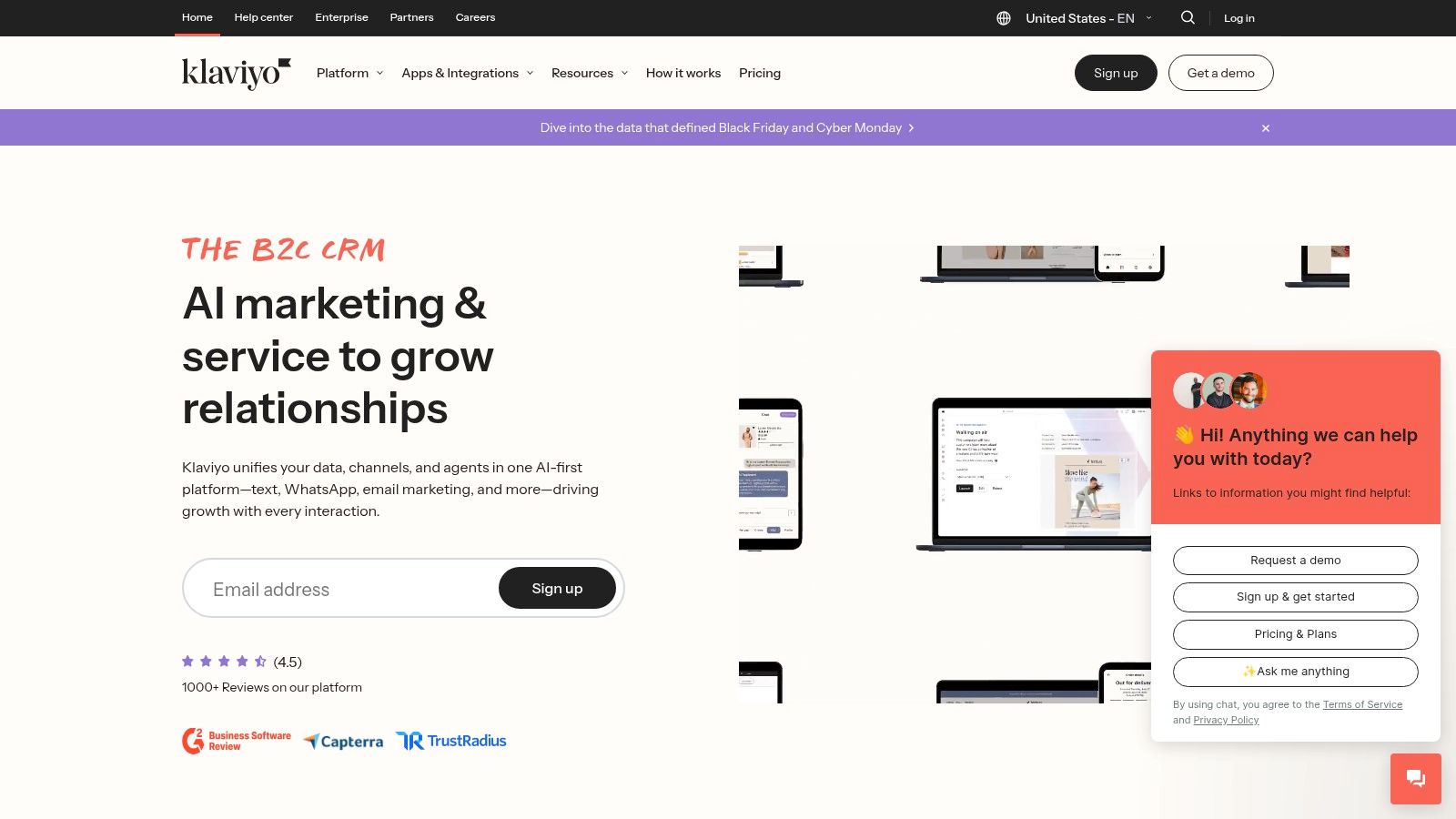
This deep data integration allows for incredibly powerful and personalized automation. For example, you can easily build automated email sequences (called "flows") for abandoned carts, browse abandonment, and post-purchase follow-ups that are hyper-targeted based on what a customer has viewed or bought. Its reporting dashboards are designed to show you exactly how much revenue each email and SMS campaign generates, connecting your marketing efforts directly to sales.
While the platform is powerful, its singular focus on e-commerce means it can be overkill for non-retail businesses. The pricing model scales with your contact list and sending volume, which can become costly for large stores. However, for an online business focused on maximizing customer lifetime value, the investment often provides a clear and substantial return.
Platform Breakdown
| Feature | Detail |
|---|---|
| Best For | Ecommerce businesses (especially on Shopify, BigCommerce, or Magento) needing advanced, revenue-focused automation. |
| Key Strength | Deep data integration with ecommerce platforms, powerful segmentation, and combined email/SMS automation flows. |
| Limitation | Can be complex and expensive for businesses not focused on ecommerce; variable SMS pricing. |
| Pricing | Free plan for up to 250 contacts & 500 email sends; paid plans start at $20/month (Email). |
Actionable Takeaway: Use Klaviyo’s predictive analytics to create customer segments like "likely to buy," "at risk of churning," or "high-value customers." Then, build automated flows to target each group with a tailored offer, such as a special discount for at-risk customers or early access for your VIPs. This strategy can directly boost retention and sales.
3. HubSpot Email Marketing (Marketing Hub)
HubSpot is much more than an email tool; it’s a complete marketing, sales, and service platform built around a powerful, free CRM. Its email marketing features, found in the Marketing Hub, are designed for businesses that want a single source of truth for all customer interactions. This native integration enables sophisticated personalization and automation based on a contact's entire journey with your company, from their first website visit to their most recent support ticket.
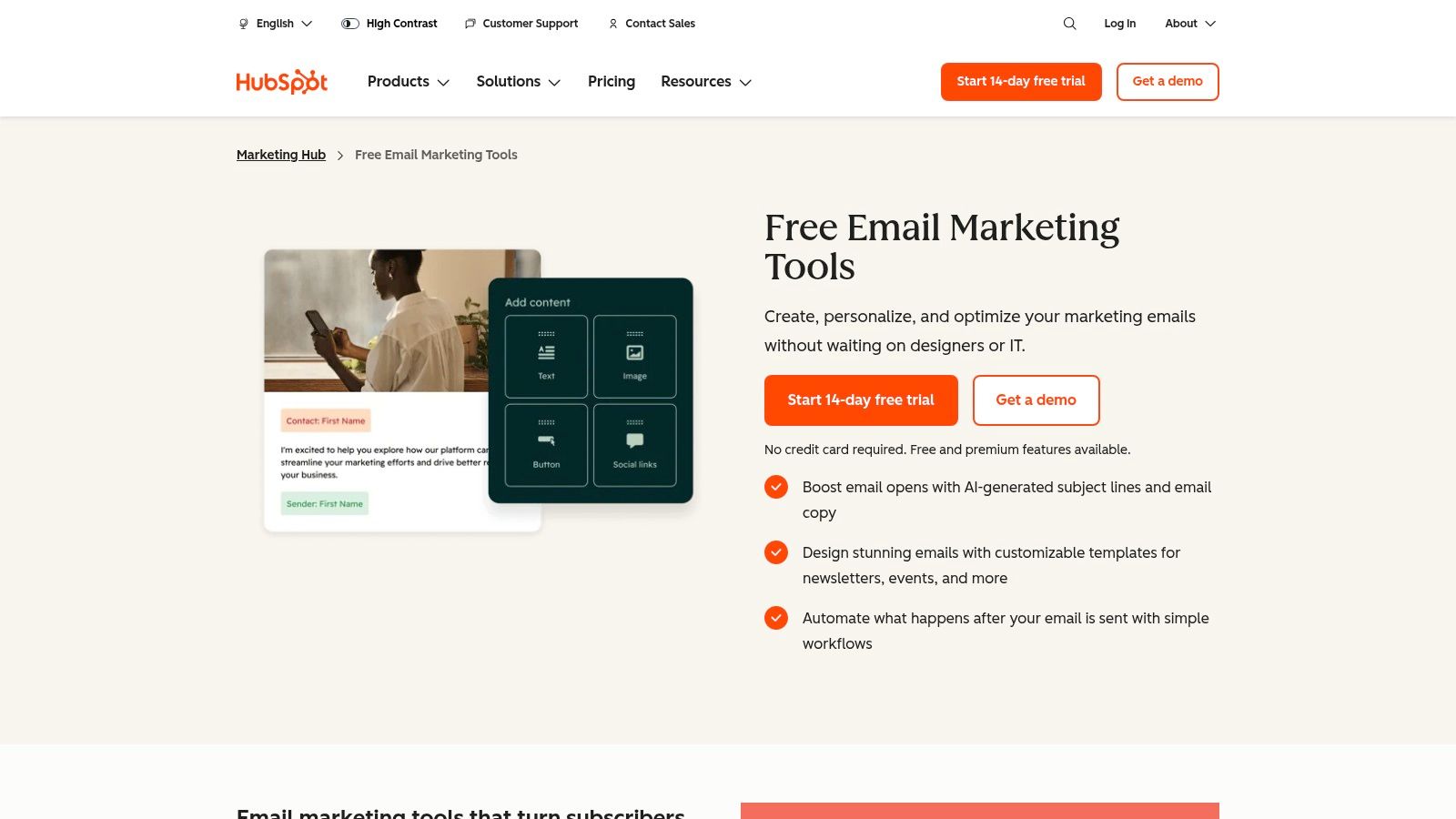
The platform's strength lies in its ability to connect email performance directly to revenue. Since every email is tied to the CRM, you can track how your campaigns influence sales deals and attribute ROI with incredible precision. The drag-and-drop editor is clean and efficient, but the real power is unlocked when you combine it with HubSpot’s automation workflows to create deeply personalized customer journeys. For teams looking to align marketing and sales, HubSpot is one of the best email marketing tools available.
However, this all-in-one power comes at a price. While HubSpot offers a free email tool, accessing the advanced automation and reporting features requires investing in the Professional or Enterprise tiers of Marketing Hub. These plans can be a significant investment, often including mandatory onboarding fees, making it a better fit for scaling businesses than for those just starting out.
Platform Breakdown
| Feature | Detail |
|---|---|
| Best For | B2B companies and sales-driven teams that need email marketing deeply integrated with a CRM. |
| Key Strength | Unbeatable native CRM integration, providing a 360-degree customer view for unparalleled personalization and attribution. |
| Limitation | Can become very expensive as you add contacts or require advanced features; onboarding fees for higher tiers. |
| Pricing | Free tools available; Marketing Hub Starter plan begins at $18/month. |
Actionable Takeaway: Leverage HubSpot’s "smart lists" to automatically segment contacts based on CRM data, like their lifecycle stage or last activity date. For instance, create a list of all "Marketing Qualified Leads" who haven't been contacted in 30 days and send them a targeted nurturing email. This ensures your messages are always relevant without manual work and is a cornerstone of the best email marketing strategies.
4. Brevo (formerly Sendinblue): The Budget-Friendly Omnichannel Hub
Brevo, formerly known as Sendinblue, has earned its spot by offering a powerful suite of marketing tools at an incredibly competitive price. It goes beyond email to create a true omnichannel hub, integrating SMS marketing, WhatsApp campaigns, push notifications, and live chat into one platform. This makes it one of the best email marketing tools for businesses aiming to unify all their customer communication without a massive budget.
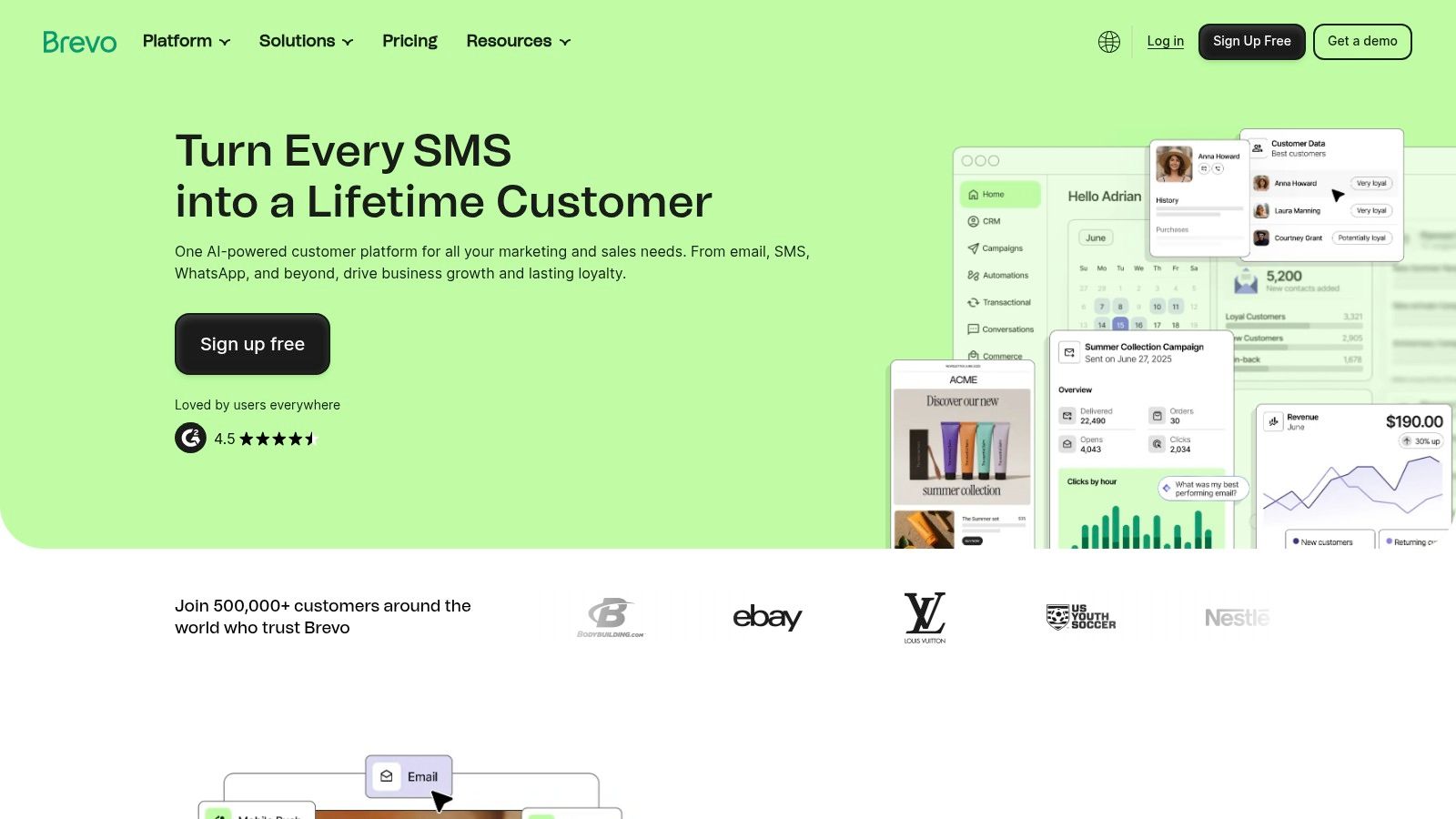
The platform’s key strength is its generous free tier, which includes marketing automation for up to 2,000 contacts—a feature many competitors charge a premium for. Its drag-and-drop editor is functional, and the automation builder is surprisingly robust, allowing you to create complex workflows based on user behavior. The interface is clean, though some new users might find it slightly less intuitive than rivals like Mailchimp at first.
However, some key features are reserved for higher-priced plans. For example, A/B testing, send-time optimization, and advanced reporting are only available on the Business tier. A dedicated IP address, which is crucial for managing your sender reputation at high volumes, is also a paid add-on. This is an important consideration for anyone planning to send a large number of emails.
Platform Breakdown
| Feature | Detail |
|---|---|
| Best For | Growing SMBs and startups needing a cost-effective, all-in-one platform for email, SMS, and chat. |
| Key Strength | Generous free plan with automation, competitive pricing, and true omnichannel messaging capabilities. |
| Limitation | Key features like A/B testing are gated to higher tiers; the interface can have a steeper learning curve. |
| Pricing | Free plan for up to 300 emails/day; paid plans start at $25/month (Starter). |
Actionable Takeaway: Use Brevo's included landing page builder to create dedicated sign-up pages for different marketing campaigns. For example, if you run a webinar, create a specific landing page for it. This allows you to tag new subscribers from the start and trigger a targeted welcome series, improving personalization immediately. As you grow, consider a dedicated IP to improve email deliverability.
5. ActiveCampaign: The Automation Powerhouse for Growing Businesses
ActiveCampaign positions itself as a customer experience automation platform, moving beyond traditional email marketing into a deeply integrated system. It is a top choice for small-to-midsize businesses that require powerful, event-based automations to connect their sales and marketing efforts. The platform’s greatest strength is its visual automation builder, which lets you create incredibly sophisticated workflows based on website tracking, e-commerce activity, and email engagement.
The platform excels at creating detailed, cross-channel customer journeys. With over 1,000 integrations, it connects seamlessly with tools like Shopify, Salesforce, and WordPress, allowing you to use triggers like "abandoned cart" or "form submission" to kick off a series of personalized communications. While its interface can feel more complex than beginner-friendly tools, the level of control it provides is unparalleled for businesses ready to scale their lifecycle marketing.
This power comes with a steeper learning curve. Features are heavily gated by tier, and costs increase based on both your contact count and the specific features you need. Add-ons for services like SMS or WhatsApp also increase the overall investment, so it’s important to map out your needs before committing.
Platform Breakdown
| Feature | Detail |
|---|---|
| Best For | SMBs, B2B companies, and e-commerce stores that need sophisticated marketing and sales automation. |
| Key Strength | Exceptionally powerful and flexible visual automation builder and extensive integration library. |
| Limitation | The interface can be complex for beginners; pricing becomes expensive as features and contacts are added. |
| Pricing | Plans start at $29/month (Lite) for 1,000 contacts, billed annually. |
Actionable Takeaway: Set up ActiveCampaign's site tracking feature right away. By placing its tracking script on your website, you can create automations based on which pages a contact visits. For example, you can automatically tag someone who visits your pricing page three times as a "hot lead" and trigger an internal notification for your sales team to follow up. This is a simple, powerful way to identify purchase intent.
6. Constant Contact: The SMB Favorite for Guided Marketing
Constant Contact has been a cornerstone of the email marketing world for decades, earning a reputation as a reliable and supportive platform for small businesses, local shops, and nonprofits. It stands out by pairing a straightforward, easy-to-use interface with exceptionally strong customer support, including live phone and chat assistance. This focus on guidance makes it one of the best email marketing tools for those who want a helping hand with their strategy.
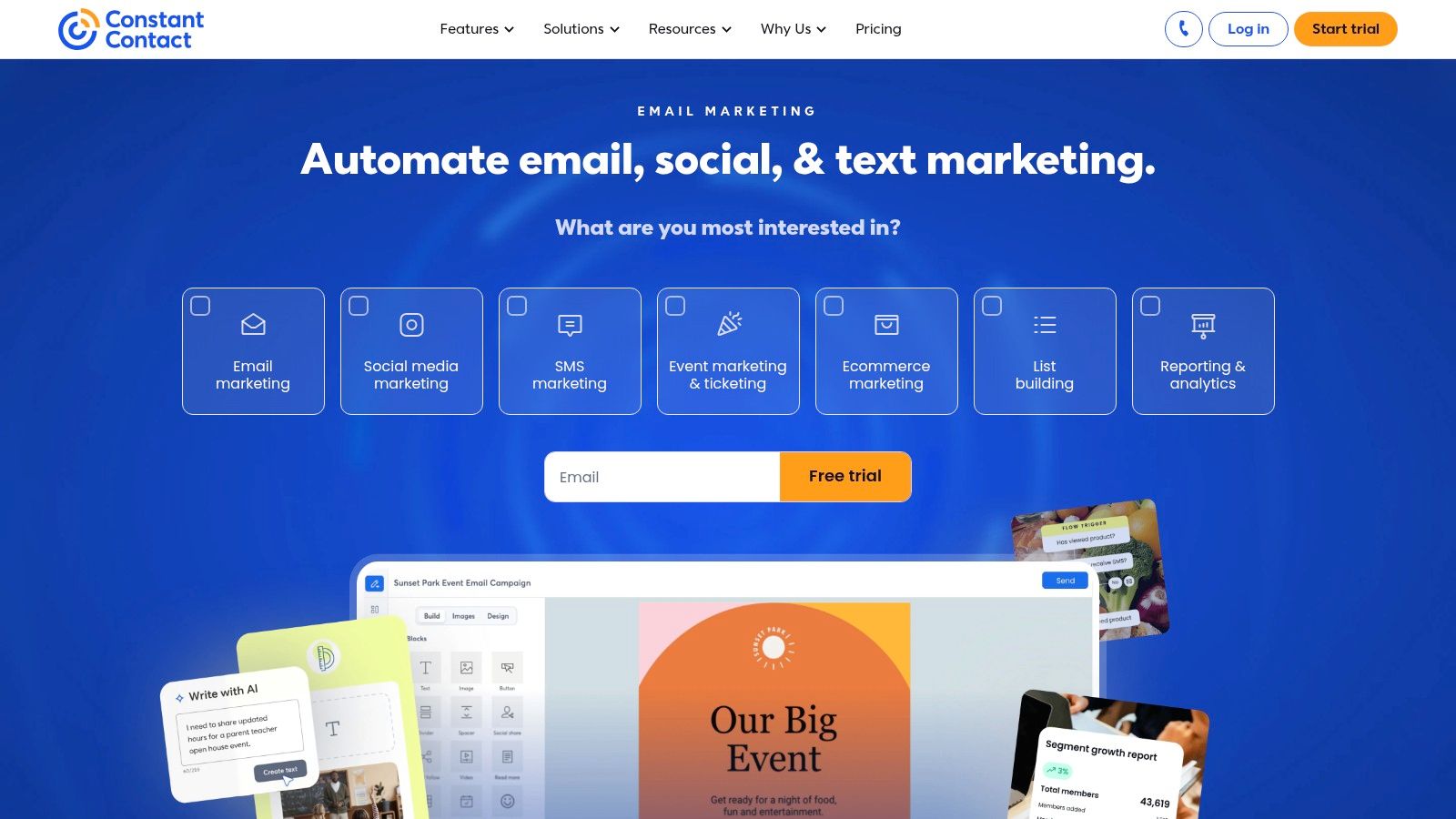
The platform offers a solid suite of features beyond email, including social media posting, SMS marketing, and event management tools. Its branded template builder and "BrandKit" feature are particularly useful—you can upload your brand assets, and the tool will automatically generate consistent, professional-looking emails for you. While it may not have the cutting-edge automation of newer competitors, its core functionality is robust and dependable.
However, its pricing model, which scales with contact count, can become a consideration for businesses with rapidly growing lists. Advanced features like dynamic content and comprehensive A/B testing are also reserved for higher-tier plans, which might be a limitation for data-driven marketers. Despite this, its combination of usability and direct support remains a compelling offer for its target audience.
Platform Breakdown
| Feature | Detail |
|---|---|
| Best For | Small businesses, local retailers, and nonprofits looking for a user-friendly platform with excellent support. |
| Key Strength | Unmatched customer support (phone/chat), straightforward user interface, and integrated event/social tools. |
| Limitation | Can be more expensive than some rivals at scale; some advanced automation features are limited. |
| Pricing | Plans start at $12/month (Core) for up to 500 contacts. |
Actionable Takeaway: Take full advantage of Constant Contact's live support when you're getting started. Schedule an onboarding call and have an expert walk you through importing your list, creating your first template, and setting up a welcome automation. This personalized guidance can significantly shorten your learning curve and build your confidence.
Visit Constant Contact
7. ConvertKit (Kit): The Creator's Marketing Hub
ConvertKit, recently rebranded to Kit, has built a loyal following as the go-to email marketing tool for creators. It was designed from the ground up for bloggers, podcasters, course creators, and newsletter writers, with a focus on growing an audience and monetizing it directly. Instead of complex e-commerce features, ConvertKit excels at creating simple, effective sales funnels for digital products and paid subscriptions.
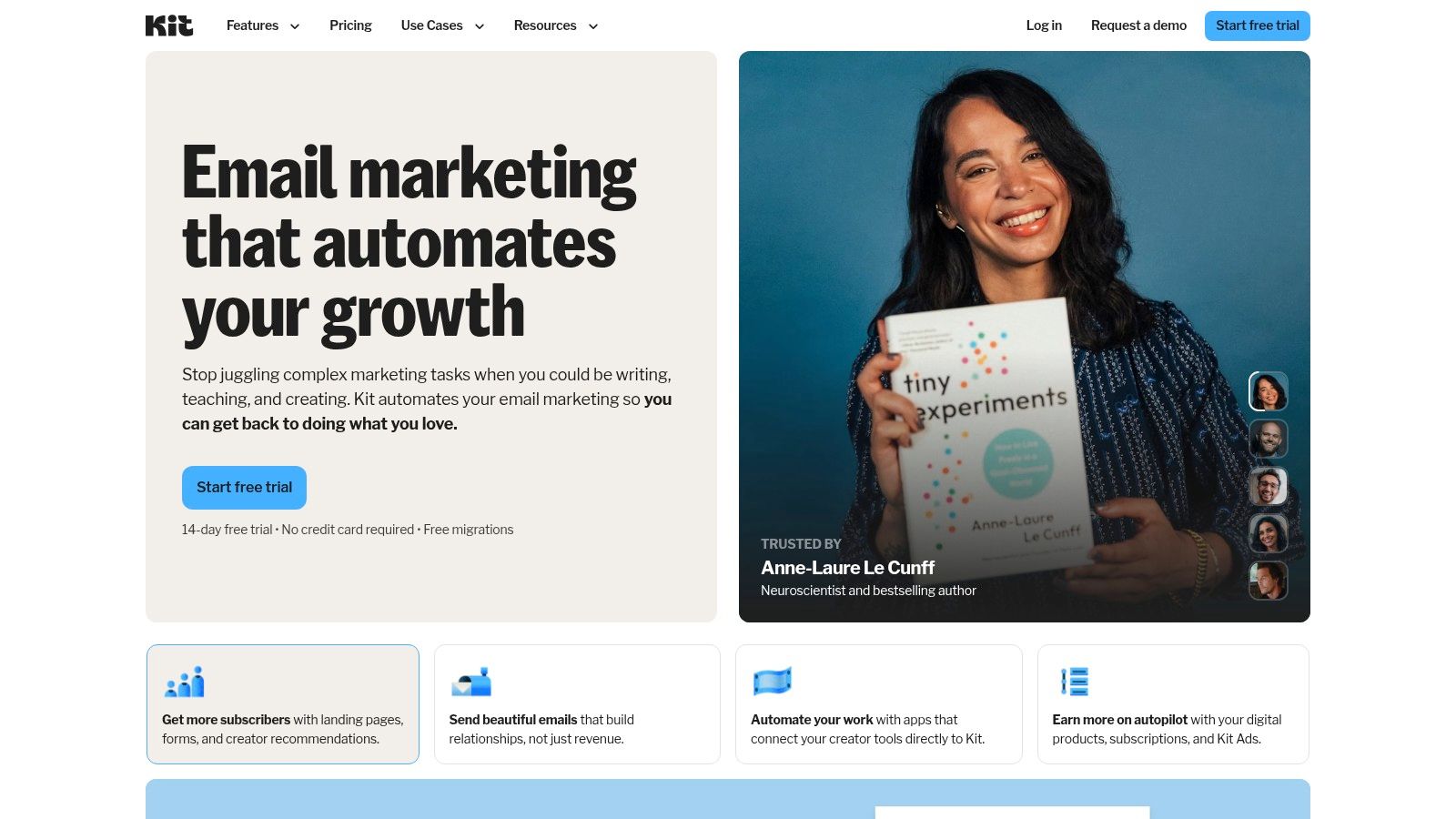
The platform’s strength lies in its elegant simplicity and powerful automation. The visual automation builder makes it easy to map out subscriber journeys, from a welcome sequence to a multi-day product launch. Its subscriber-centric model means you manage one profile per person, using tags and segments to organize your list without paying for duplicate contacts. This is ideal for understanding how individual subscribers interact with your content over time.
While its creator focus is a major advantage, it can be a limitation for businesses with other needs, like advanced B2B lead scoring or deep physical product e-commerce integrations. Recent price increases have also made it a more premium option, but for those serious about building a creator-led business, the investment is often justified by its specialized toolset.
Platform Breakdown
| Feature | Detail |
|---|---|
| Best For | Professional bloggers, course creators, authors, and newsletter writers focused on monetization. |
| Key Strength | Powerful tagging and segmentation, user-friendly visual automations, and built-in monetization tools. |
| Limitation | Less suitable for traditional e-commerce or B2B companies; pricing can be higher than some competitors. |
| Pricing | Free plan for up to 1,000 subscribers; paid plans start at $29/month (Creator). |
Actionable Takeaway: Use ConvertKit’s "Link Triggers" in your emails. Here’s how: set up an automation that tags a subscriber when they click a specific link, such as one showing interest in an upcoming product. This is a powerful, low-friction way to segment your audience for a future sales launch. For more ideas on audience building, you can learn how to grow your email list.
8. MailerLite: The Best Value for Growing Creators
MailerLite has earned its place as one of the best email marketing tools for users seeking a clean, powerful, and affordable platform. It strikes an impressive balance between user-friendliness and a rich feature set, making it ideal for freelancers, creators, and small businesses who need more than the basics without a high price tag. The platform extends beyond email to include a website builder, landing pages, and even the ability to sell digital products.
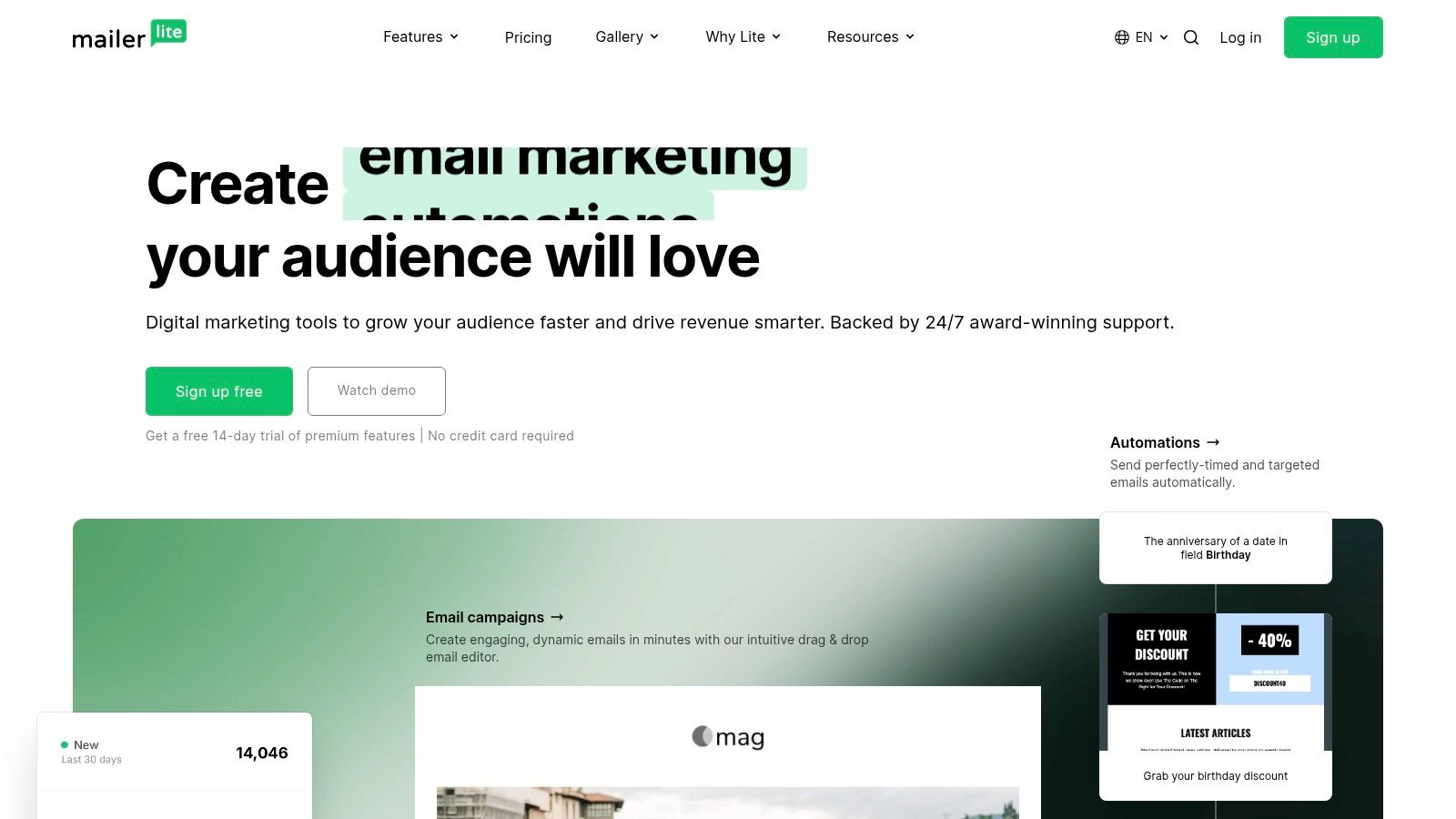
The platform’s strength is its uncluttered interface and generous features, even on its free and entry-level plans. Users get access to automation, segmentation, and an intuitive drag-and-drop editor that makes creating campaigns a breeze. Unlike many competitors that reserve A/B testing for premium tiers, MailerLite includes it in its core offering, empowering you to optimize your campaigns from day one.
While MailerLite is incredibly capable for most users, those with complex, enterprise-level needs might find its advanced automation slightly less robust than more expensive platforms. However, for the vast majority of growing businesses and content creators, MailerLite offers an unbeatable combination of price, performance, and features.
Platform Breakdown
| Feature | Detail |
|---|---|
| Best For | Solopreneurs, content creators, and small businesses looking for an affordable yet powerful all-in-one marketing platform. |
| Key Strength | Excellent value for money, a clean and intuitive user interface, and a generous free plan that includes automation. |
| Limitation | Advanced automation and reporting features are less comprehensive than high-end, enterprise-focused competitors. |
| Pricing | Free plan for up to 1,000 subscribers and 12,000 emails/month; paid plans start at $10/month (Growing Business). |
Actionable Takeaway: Use MailerLite's integrated landing page builder. Here’s a simple plan: create a lead magnet (like a free checklist), build a landing page for it in MailerLite, and use their forms to automatically add new subscribers to a welcome automation sequence—all within one platform. This streamlines your list growth process from the very beginning.
9. Omnisend: The Ecommerce Powerhouse for Email & SMS
Omnisend is purpose-built for e-commerce merchants who want to drive sales through unified email, SMS, and web push notifications. Where other tools offer broad functionality, Omnisend focuses squarely on the online retail journey, providing powerful, pre-built automations designed to convert. It integrates deeply with platforms like Shopify, BigCommerce, and WooCommerce, making it one of the best email marketing tools for store owners.
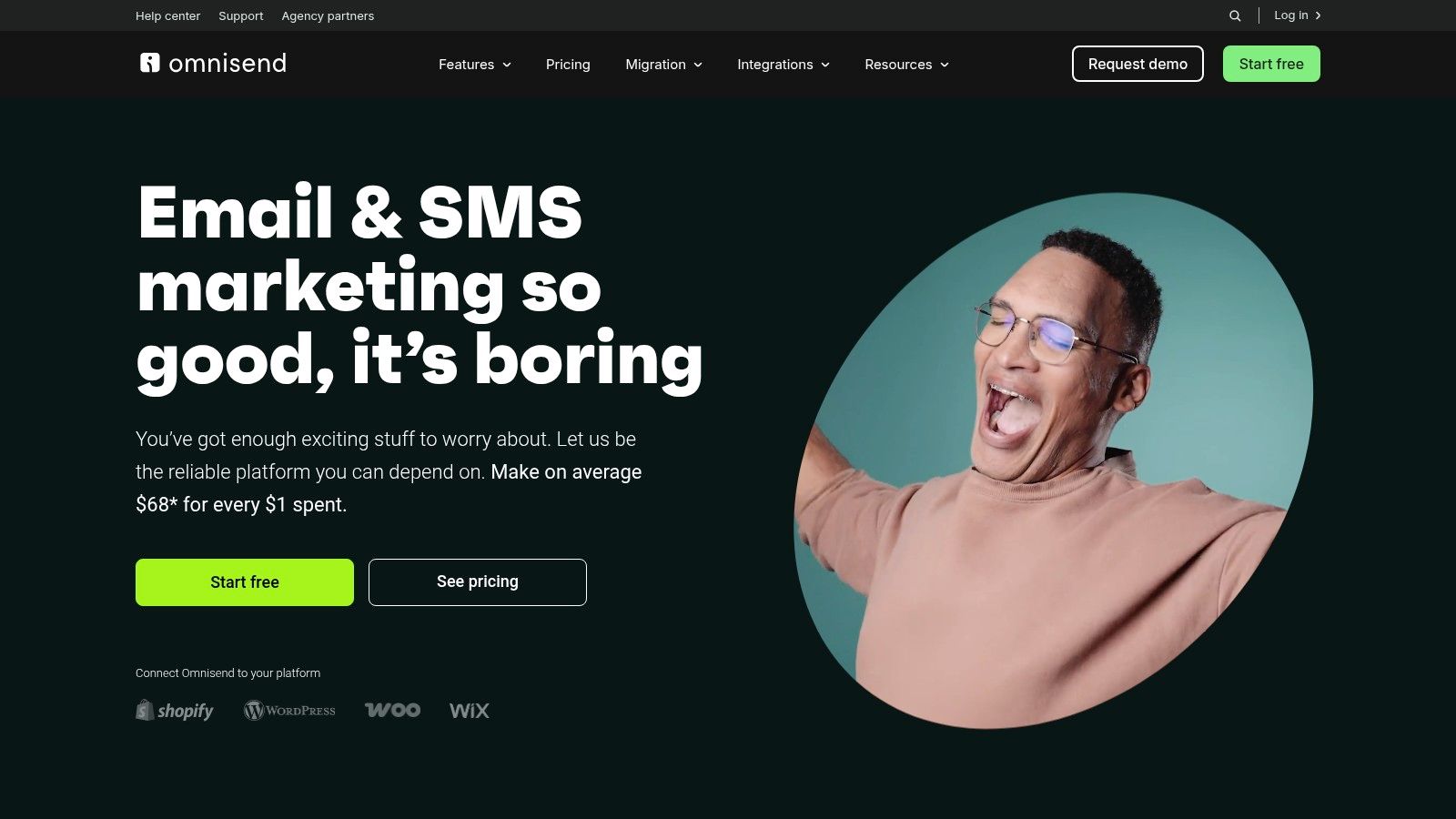
The platform's key strength is its "quick win" workflows. You can set up cart abandonment, browse abandonment, and welcome series in minutes, often seeing an immediate return on your investment. Unlike many competitors, Omnisend bundles these channels into a single, cohesive workflow builder. This allows you to, for example, send a cart recovery email, followed by an SMS reminder an hour later, all from one dashboard.
While its free plan is generous for email, the true power is unlocked in paid tiers which include SMS credits and unlimited email sends. The Pro plan can feel pricey, but for high-volume stores, the combination of unlimited emails, robust automation, and excellent 24/7 support provides significant value. The cost of SMS credits also varies by destination country, which is important to factor in.
Platform Breakdown
| Feature | Detail |
|---|---|
| Best For | Ecommerce stores (especially on Shopify or BigCommerce) looking for an integrated email and SMS solution. |
| Key Strength | Powerful, pre-built ecommerce automations and the seamless combination of email, SMS, and push notifications. |
| Limitation | SMS pricing can be complex and varies by region; not as feature-rich for non-ecommerce businesses. |
| Pricing | Free plan for up to 250 contacts; paid plans start at $16/month (Standard). |
Actionable Takeaway: Use Omnisend’s "Product Recommender" block within your campaigns. It dynamically pulls products based on a customer’s browsing or purchase history, making your emails highly personalized. This increases the likelihood of a repeat purchase without any manual effort on your part—just drag, drop, and send.
10. beehiiv: The Ultimate Platform for Newsletter Growth
beehiiv is purpose-built for creators who want to build, grow, and monetize their newsletters. It moves beyond traditional email marketing by integrating a powerful website builder, advanced analytics, and native monetization tools into one seamless platform. This focus makes it an exceptional choice for writers and content entrepreneurs who treat their newsletter as a core business product, not just a marketing channel.
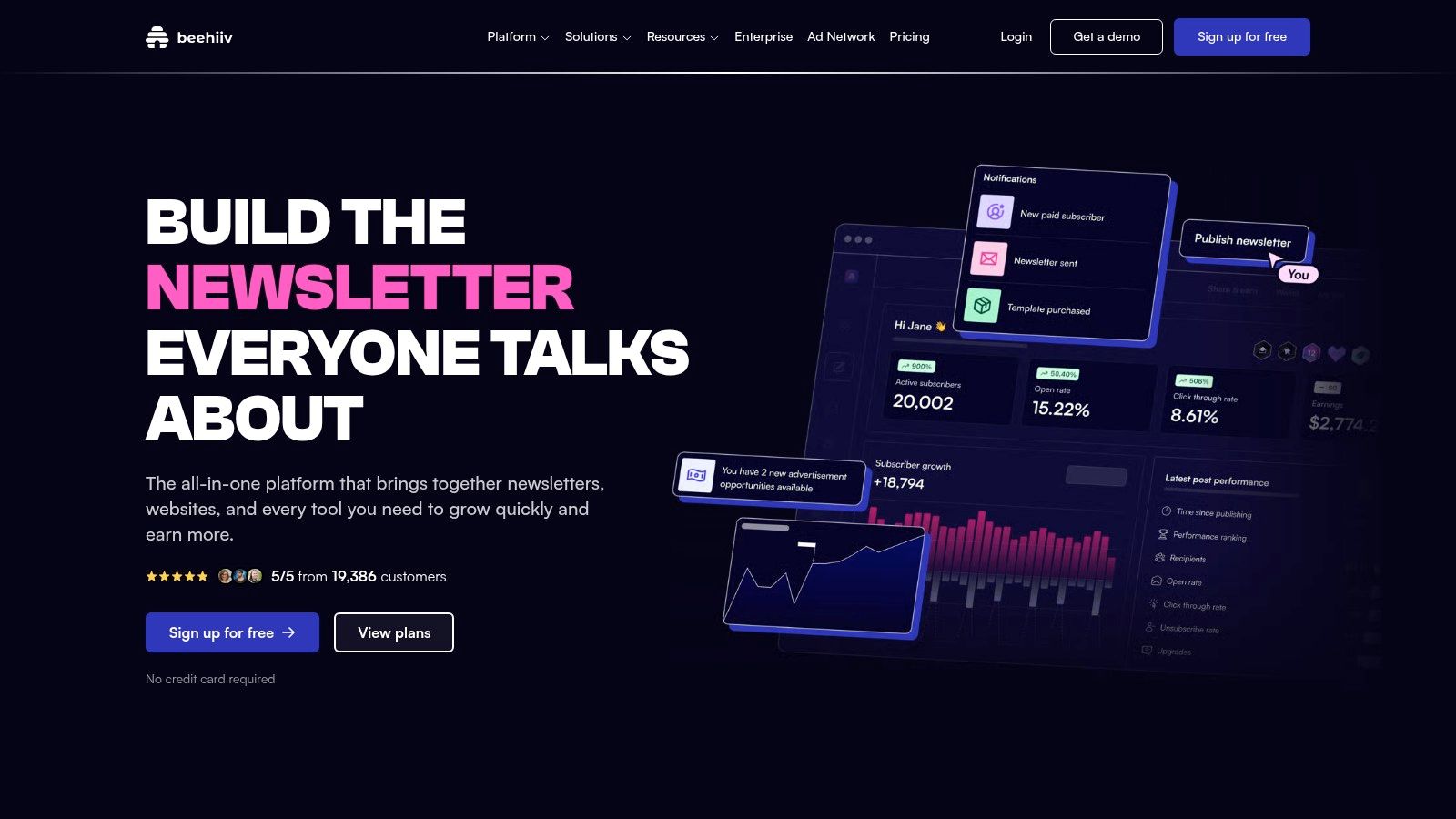
The platform's standout features are its growth and monetization engines. The built-in ad network, "Boosts" recommendation program, and paid subscription options provide clear paths to generating revenue. A major differentiator is that beehiiv offers unlimited email sends on every plan, including its generous free tier. This removes a significant barrier to growth, allowing creators to focus on producing great content without worrying about scaling costs.
While its newsletter-centric design is a major strength, it might feel less intuitive for businesses focused on complex, multi-product e-commerce funnels. The most powerful features, like API access and removing beehiiv branding, are reserved for higher-tier plans. However, for anyone serious about building a media brand through a newsletter, beehiiv provides one of the most comprehensive and cost-effective toolkits available.
Platform Breakdown
| Feature | Detail |
|---|---|
| Best For | Newsletter creators, content publishers, and writers focused on audience growth and monetization. |
| Key Strength | Integrated growth tools (Boosts, Ad Network), unlimited sends on all plans, and native subscription management. |
| Limitation | Less focused on traditional e-commerce automation; key features like brand removal are on paid tiers. |
| Pricing | Free plan for up to 2,500 subscribers; paid plans start at $42/month (Grow). |
Actionable Takeaway: Leverage the "Boosts" feature from day one. By recommending other relevant newsletters, you can earn a commission for new subscribers you drive to them, and other creators can recommend your newsletter to their audience in return. This creates a powerful, mutually beneficial growth loop that is built right into the platform.
11. G2: The Crowd-Sourced Comparison Engine
While not an email marketing platform itself, G2's Email Marketing Software category is an indispensable research tool. It acts as a neutral marketplace, aggregating thousands of verified user reviews, ratings, and detailed product comparisons. Instead of relying on marketing copy, you get real-world feedback on what it's like to use a tool day-to-day, making it one of the best places to start your search.
The platform's strength lies in its Grid® reports, which visually map out tools based on user satisfaction and market presence. You can filter options by company size, specific features like A/B testing, and user ratings to create a personalized shortlist. This approach helps you quickly identify top performers and discover emerging platforms that might not have the brand recognition of industry giants but offer compelling value.
However, it's important to be aware that vendor placement can sometimes be influenced by paid partnerships. The depth of reviews also varies; newer tools may have limited feedback. Despite this, G2 provides an unmatched, data-driven overview of the software landscape, helping you make a more informed decision before committing to a trial.
Platform Breakdown
| Feature | Detail |
|---|---|
| Best For | Marketers in the research phase, teams comparing vendors, and anyone looking for unbiased user reviews. |
| Key Strength | Aggregates a massive volume of verified user reviews, providing authentic pros and cons for shortlisting tools. |
| Limitation | Paid vendor placements can influence visibility; review depth can be inconsistent for newer products. |
| Pricing | Free to browse and compare all software listings and user reviews. |
Actionable Takeaway: Look beyond the overall rating. Use G2's comparison feature to select your top three contenders for a side-by-side analysis. Pay close attention to the "What do you dislike?" section in reviews—this often reveals recurring issues or limitations that a vendor's website won't mention, giving you a more complete picture.
Visit G2's Email Marketing Category
12. Capterra: The Research Hub for Comparing Tools
Like G2, Capterra is a comprehensive software directory where you can compare hundreds of the best email marketing tools side-by-side. It’s an invaluable resource for the research phase, allowing you to filter options based on specific features, pricing models, and business size. This approach saves you from visiting dozens of individual sites to gather the same information.
Capterra aggregates user reviews, expert opinions, and vendor-provided data into clear, digestible profiles. Its curated shortlists and comparison tools help you create a narrowed-down list of platforms that genuinely fit your needs, whether you're looking for advanced automation or a simple, free newsletter service. The platform makes the initial discovery process significantly more efficient.
While incredibly useful, it’s important to note that some vendor placements are sponsored, which can influence their ranking in certain lists. However, these are clearly labeled, and the user reviews provide an authentic layer of insight. Think of Capterra as a powerful starting point, not the final decision-maker.
Platform Breakdown
| Feature | Detail |
|---|---|
| Best For | Marketers and business owners in the research phase of selecting an email marketing platform. |
| Key Strength | Extensive filtering options and aggregated user reviews that simplify the comparison process. |
| Limitation | Sponsored placements can affect search result order; not all vendor profiles are equally detailed. |
| Pricing | Free to use for browsing and comparing software. |
Actionable Takeaway: Use Capterra’s comparison feature to select your top three or four contenders. This creates a side-by-side table that highlights differences in features, pricing, and user ratings, giving you a clear, at-a-glance overview to inform your final choice before committing to free trials.
Visit Capterra's Email Marketing Software Directory
Top 12 Email Marketing Tools — Features & Pricing Comparison
| Product | Core features ✨ | Best for 👥 | USP 🏆 | Pricing/value 💰 | Quality ★ |
|---|---|---|---|---|---|
| Mailchimp | ✨ Visual editor, templates, automations, multivariate tests | 👥 SMBs & growing teams | 🏆 Large ecosystem & easy scaling | 💰 Free limited → pay-as-you-grow, add-ons | ★★★★ |
| Klaviyo | ✨ Email + SMS, unified profiles, deep ecommerce data | 👥 Ecommerce & Shopify/B2C stores | 🏆 Revenue-driven personalization & analytics | 💰 Free to 250 profiles, costly at scale | ★★★★ |
| HubSpot (Marketing Hub) | ✨ Drag‑drop + CRM personalization, workflows, attribution | 👥 CRM-led marketing & sales teams | 🏆 Native CRM + advanced attribution | 💰 Tiered (seats/contacts), onboarding fees | ★★★★ |
| Brevo (Sendinblue) | ✨ Email/SMS, automation, landing pages, send-based pricing | 👥 Budget-conscious SMBs | 🏆 Omnichannel in one account, low entry cost | 💰 Send-based pricing; competitive entry tiers | ★★★★ |
| ActiveCampaign | ✨ Visual automations, event triggers, 1,000+ integrations | 👥 SMBs needing complex automations | 🏆 Powerful lifecycle automations | 💰 Tiered by contacts/features; mid-priced | ★★★★ |
| Constant Contact | ✨ Branded templates, forms, landing pages, phone support | 👥 Local businesses & nonprofits | 🏆 Straightforward setup & strong support | 💰 Tiered (contacts); discounts for nonprofits | ★★★ |
| ConvertKit (Kit) | ✨ Unlimited broadcasts, monetization, subscriber billing | 👥 Creators, newsletter publishers | 🏆 Built‑in monetization & simple billing | 💰 Subscriber-based; free/basic paid tiers | ★★★★ |
| MailerLite | ✨ Drag‑drop, sites/landing pages, multivariate tests, AI | 👥 Small teams & new marketers | 🏆 Generous free tier + clean UI | 💰 Very affordable; generous free plan | ★★★★ |
| Omnisend | ✨ Ecommerce automations, email+SMS+push, product flows | 👥 Ecommerce stores (Shopify/BigCommerce) | 🏆 Quick cart/product recovery revenue wins | 💰 Bundled SMS credits; Pro pricier | ★★★★ |
| beehiiv | ✨ Newsletter + site builder, monetization, unlimited sends | 👥 Newsletter publishers & creators | 🏆 Growth & monetization tools (ads, Boosts) | 💰 Free core; paid for advanced features | ★★★★ |
| G2 (directory) | ✨ Side-by-side comparisons, verified reviews, grids | 👥 Buyers shortlisting tools | 🏆 Real-user feedback & category reports | 💰 Free to browse (sponsored listings) | ★★★★ |
| Capterra (directory) | ✨ Curated shortlists, pricing snapshots, filters | 👥 Buyers researching software | 🏆 Clear pricing views & filtered shortlists | 💰 Free to use (sponsored placements) | ★★★★ |
Your Next Step: Making the Right Choice for Your Business
We've covered a lot of ground, from all-in-one platforms like Mailchimp to specialized tools like Klaviyo for e-commerce and beehiiv for creators. Each one offers a unique set of features designed to solve specific marketing challenges. The key takeaway is that the "best" tool isn't universal—it's the one that aligns perfectly with your business goals, budget, and technical comfort level.
A Practical Framework for Your Final Decision
To move from analysis to action, don't get distracted by a long list of features you'll never use. Instead, focus on these three critical factors to make a confident choice.
- Your Business Model: How do you make money? An e-commerce store needs deep Shopify integration (Klaviyo, Omnisend). A B2B company needs a strong CRM (HubSpot, ActiveCampaign). A creator needs monetization tools (ConvertKit, beehiiv). Your business model is the single most important filter.
- Your Technical Comfort Level: Be honest about your team's skills. Do you need a simple, drag-and-drop interface that just works (MailerLite, Constant Contact), or do you have the resources to master a powerful automation engine (ActiveCampaign)? Choosing a tool that is too advanced will only lead to frustration.
- Your Budget and Growth Plans: Look beyond the starting price. Model your costs based on your projected list growth over the next 12-24 months. A tool that seems cheap now might become expensive as you scale. For a wider comparison, you can explore reviews of other top email marketing platforms to ensure you're making the most informed choice.
Summary and Recommended Next Step
Choosing the right email marketing tool is a strategic investment in your brand's ability to connect with your audience. By focusing on your specific needs—whether that's e-commerce, content creation, or B2B sales—you can select a platform that acts as a true partner in your growth.
Your Recommended Next Step: Once you’ve chosen a tool, your first priority is to set up a simple, automated welcome email series. This is your best opportunity to make a strong first impression, set expectations, and begin building a relationship with new subscribers. It’s a small, achievable win that delivers immediate and lasting value, laying the foundation for all your future email marketing success.
Ready to take your email campaigns to the next level? No matter which platform you choose, EmailGum can help you validate your email lists to improve deliverability and protect your sender reputation. Ensure your meticulously crafted messages reach the inbox by cleaning your list with our powerful verification tool at EmailGum.