
If you’ve ever thought about starting a newsletter, there’s never been a better time.
Thousands of creators, businesses and solo entrepreneurs are building audiences they own instead of relying on social media algorithms. Whether you want to share ideas, grow a business, or generate an income, a newsletter is one of the best long-term assets you can build.
The best part? You don’t need a huge audience, technical skills, or years of experience to get started.
In this guide, we’ll walk through exactly how to start a newsletter from scratch.
Why Start a Newsletter?
Unlike social media, your email list belongs to you.
Algorithms change. Platforms come and go. But an email list gives you a direct connection to your readers.
A newsletter can help you:
- Build an audience around your expertise.
- Promote products or services.
- Earn through sponsorships and affiliate marketing.
- Grow a personal brand.
- Drive traffic to your website.
- Launch digital products in the future.
Many successful creators started with just a handful of subscribers.
Step 1: Choose Your Topic
The biggest mistake beginners make is trying to write about everything.
Instead, choose one clear topic.
Examples include:
- Marketing
- Personal finance
- Fitness
- AI
- Technology
- Investing
- Parenting
- Local news
- Careers
- E-commerce
A good newsletter sits at the intersection of:
- What you’re interested in.
- What people are searching for.
- What businesses are willing to advertise around.
If you can consistently talk about a topic every week for the next year, you’re probably onto something.
Step 2: Validate Your Newsletter Idea
Before you spend weeks writing content, make sure people actually care about your topic.
The best newsletters solve a specific problem for a specific audience.
Ask yourself:
- Are people searching for this topic?
- Can I write about it every week?
- Are there businesses that would advertise to this audience?
- Will readers still care about this topic in a year’s time?
If you’re struggling to come up with an idea, try our free tool at StartNewsletter.net.
 StartNewsletter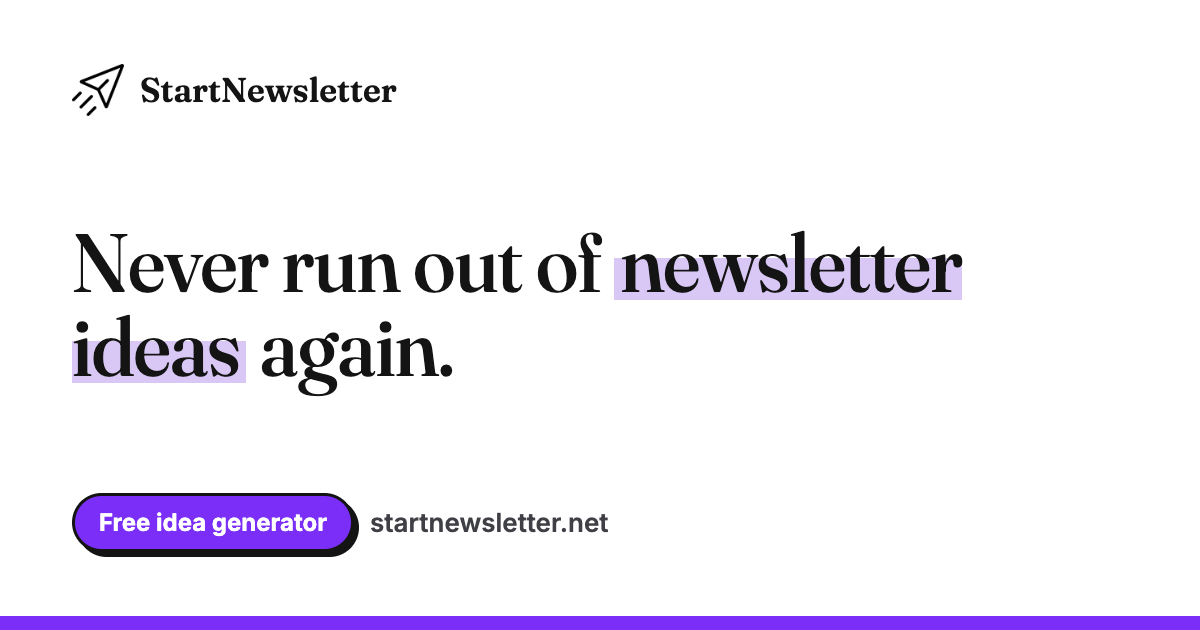
StartNewsletter analyses your chosen niche and generates newsletter ideas, content angles and topics based on what people are already interested in. It’s one of the fastest ways to move from “I want to start a newsletter” to having a year’s worth of content ideas.
Rather than staring at a blank page, you’ll have a list of proven topics you can start writing about immediately.
Step 3: Pick a Newsletter Platform
You’ll need software to manage subscribers and send emails.
There are plenty of options, but for most beginners we recommend Beehiiv.
Beehiiv includes:
- A newsletter website.
- Subscriber management.
- Email automation.
- Built-in referral programmes.
- Analytics.
- Monetisation tools.
- No coding required.
It takes just a few minutes to set up and can grow with you from your first subscriber to hundreds of thousands.
Step 4: Give Your Newsletter a Great Name
Don’t overthink it.
A simple, memorable name is almost always better than something clever nobody understands.
Good examples:
- Marketing Minute
- Daily Property Brief
- AI Weekly
- The Side Hustle Letter
- Coffee & Code
Your name should instantly tell readers what they’ll get.
Step 5: Write Your First Edition
Many people spend weeks designing logos before writing anything.
Don’t.
Write your first email instead.
A simple structure works well:
Introduction
Tell readers what they’ll learn.
Main Story
Teach one useful idea.
Resources
Share helpful links, tools or recommendations.
Call to Action
Invite readers to reply, share the newsletter or subscribe.
Your first edition doesn’t need to be perfect.
It just needs to be published.
Step 6: Create a Simple Landing Page
People need somewhere to subscribe.
Include:
- A clear headline.
- One sentence explaining the value.
- A subscribe form.
- A preview of previous issues if possible.
Keep it simple.
The easier it is to understand your newsletter, the more people will subscribe.
Step 7: Get Your First 100 Subscribers
The first hundred subscribers are usually the hardest.
Start by sharing your newsletter:
- On LinkedIn.
- On X.
- On Facebook.
- In relevant communities.
- On Reddit where appropriate.
- With friends and colleagues.
If you already have a website, add signup forms throughout your content.
Don’t worry if growth feels slow at first.
Consistency beats viral success.
Step 8: Publish Consistently
Choose a schedule you can realistically maintain.
For example:
- Every Tuesday.
- Every Friday morning.
- The first Monday of each month.
Readers appreciate consistency more than frequency.
A great weekly newsletter is far better than a daily newsletter that stops after three weeks.
Step 9: Learn What Your Audience Wants
Pay attention to:
- Open rates.
- Click rates.
- Replies.
- Shares.
- Subscriber growth.
The best newsletters evolve based on reader feedback.
Ask questions.
Encourage replies.
Listen carefully.
Step 10: Start Making Money
Once you’ve built an audience, there are several ways to monetise your newsletter:
- Sponsorships.
- Affiliate marketing.
- Premium subscriptions.
- Digital products.
- Online courses.
- Consulting.
- Coaching.
- Job boards.
Many newsletter businesses combine several of these income streams.
Common Mistakes to Avoid
Waiting Until Everything Is Perfect
Perfection delays progress.
Launch first.
Improve later.
Writing Without a Clear Audience
If your newsletter is for everyone, it usually resonates with no one.
Publishing Inconsistently
Readers quickly forget newsletters that disappear for months.
Choose a schedule you can stick to.
Ignoring SEO
Publishing your newsletters on a searchable website helps people discover your content through Google.
Every edition can become another opportunity to attract readers.
Frequently Asked Questions
How much does it cost to start a newsletter?
You can start for free using platforms like Beehiiv and upgrade later as your audience grows.
How often should I send a newsletter?
Weekly is a great starting point for most creators.
Do I need a website?
No, but having one makes it much easier to grow through search engines.
How long should my newsletter be?
Whatever delivers value.
Some successful newsletters are under 300 words.
Others are several thousand words long.
Focus on being useful rather than hitting a word count.
Final Thoughts
Starting a newsletter is one of the best investments you can make in your online presence.
Every subscriber is someone you’ve earned permission to reach directly, without relying on changing social media algorithms.
Don’t worry about having thousands of readers.
Start with one.
Then ten.
Then one hundred.
The creators who succeed aren’t necessarily the best writers.
They’re the ones who keep showing up week after week.
The best time to start your newsletter was years ago.
The second-best time is today.
Free Resources
If you’re starting your first newsletter, these free tools can help:
- StartNewsletter.net – Generate newsletter ideas based on your niche and discover topics people actually want to read.
- Beehiiv – Our recommended platform for building and growing your newsletter.
- EmailGum – Tutorials, comparisons and guides to help you launch, grow and monetise your newsletter.
Starting a newsletter doesn’t have to be complicated. With the right idea and the right tools, you could have your first edition published in less than an hour.
If beehiiv is your pick, do not pay full price on day one. There is a 20% code for new accounts.