A new subscriber represents a massive opportunity, but only if you get the first impression right. That initial signup is a moment of peak interest, and what happens next determines whether that spark of curiosity grows into a long-term, profitable relationship or fizzles out. A powerful onboarding email sequence is the engine that drives this transformation, turning casual interest into active engagement and setting the stage for lasting customer loyalty.
Forget generic, single-shot welcome emails. Modern onboarding is a strategic, automated conversation. It’s your chance to deliver immediate value, build foundational trust, and methodically guide new users toward their crucial 'aha!' moment—the point where they truly understand the value your product or service offers. Getting this sequence right directly impacts activation rates, reduces churn, and increases the lifetime value of every new contact. It’s arguably the most critical automation in your entire email marketing arsenal.
In this guide, we'll move beyond theory and dive straight into actionable blueprints. We will dissect 8 proven onboarding email sequence examples from SaaS, ecommerce, and content-driven businesses. You’ll get the exact strategies, email-by-email copy breakdowns, and step-by-step instructions needed to build a sequence that not only welcomes but also converts.
We’ll explore everything from the foundational welcome series to more advanced, segmented automations. You will learn how to:
- Structure a sequence that builds momentum.
- Craft compelling copy that educates and persuades.
- Time your emails for maximum impact.
- Personalize the journey for different user segments.
By the end, you’ll have a complete playbook to transform your new signups into your most engaged customers.
1. The Welcome Series (5-7 Email Sequence)
The Welcome Series is the cornerstone of any effective onboarding strategy. It's a foundational 5-to-7 email sequence sent over 7-10 days immediately after a user subscribes. Its primary goal is not to sell but to welcome, educate, and build a relationship. This sequence sets the tone for all future communication, making it one of the most critical onboarding email sequence examples to master.

This approach focuses on creating immediate value. It confirms the subscription, introduces your brand's story and personality, sets clear expectations for what's to come, and gently guides the user toward their first "aha!" moment. Companies like Mailchimp and HubSpot have perfected this by making new users feel seen and valued from the very first interaction.
How to Build It: A Step-by-Step Plan
- Email 1 (Sent Immediately): The Welcome & Confirmation. Confirm their subscription, deliver any promised lead magnet, and set expectations for future emails. Keep it short and friendly.
- Email 2 (Day 2): Introduce Your Brand Story. Share your "why." What's your mission? Who's behind the brand? This builds an emotional connection.
- Email 3 (Day 4): Deliver Quick Value. Share your most popular blog post, a helpful tutorial, or a simple tip they can use right away.
- Email 4 (Day 6): Social Proof & Community. Showcase a top customer testimonial or invite them to join your social media community.
- Email 5 (Day 8): The Soft Sell. Introduce your core product or service, framing it as the solution to the problems you've discussed.
For further inspiration on structuring your initial communications, explore these powerful drip campaign examples which showcase different ways to nurture leads over time.
Actionable Takeaways
- Immediate Gratification: The first email should arrive within minutes of signup. This capitalizes on the user's peak interest and confirms their action was successful. To dive deeper into crafting this crucial first message, you can learn more about how to write the perfect welcome email on emailgum.com.
- Set Expectations Clearly: Tell subscribers what kind of content they will receive and how often. This simple step reduces unsubscribes and builds trust. For example, "Expect one email every Tuesday with our best marketing tips."
- Show, Don't Just Tell: Instead of just listing features, show users how to get value. Link to your most popular blog post, a helpful case study, or a quick-start guide.
- Humanize Your Brand: Share your brand's origin story, introduce the team, or share a customer success story. This builds an emotional connection that goes beyond a simple transaction.
2. The Value-First Nurture Sequence
The Value-First Nurture Sequence flips the traditional onboarding model on its head. Instead of immediately pushing for a sale or conversion, this approach focuses entirely on providing genuine, actionable value to the new subscriber. The core principle is to solve their problems and demonstrate your expertise first, building a strong foundation of trust and credibility before ever asking for a purchase.
This strategy is highly effective because it aligns with modern consumer behavior. People are tired of aggressive sales pitches; they want solutions. By leading with educational content, free resources, and expert insights, you position your brand as a helpful guide rather than a salesperson. Content marketing pioneers like Neil Patel and Pat Flynn have built massive audiences using this method, proving that leading with generosity is a powerful path to long-term loyalty and conversion.
How to Build It: A Step-by-Step Plan
- Email 1 (Day 1): Solve an Immediate Problem. Address a common pain point with a quick, actionable tip or a link to a helpful guide.
- Email 2 (Day 3): Share a Deeper Resource. Send a more comprehensive piece of content like a webinar replay, an e-book, or a detailed case study.
- Email 3 (Day 5): Bust a Common Myth. Challenge a common misconception in your industry and provide the correct information. This builds authority.
- Email 4 (Day 7): Introduce a Soft Pitch. Show how your product or service is the logical next step to implementing the value you've provided.
Actionable Takeaways
- Lead with Actionable Takeaways: Craft subject lines that promise immediate value, like "3 SEO tweaks you can make in 10 minutes." This encourages high open rates and trains subscribers to see your emails as must-reads.
- Follow the 80/20 Rule: Structure your sequence to be 80% pure value (guides, tips, insights) and only 20% promotion. This ratio ensures you give far more than you ask.
- Provide Downloadable Resources: Increase engagement and provide lasting value by including free checklists, templates, or e-books. These "content upgrades" give subscribers a tangible asset they can return to. For more ideas on creating engaging content, consider these SaaS email marketing examples from postmarkapp.com that show how to blend value with product education.
- Personalize Based on Pain Points: Use information gathered during signup (e.g., from a form asking about their biggest challenge) to tailor the content. An email that directly addresses a stated problem feels incredibly personal and helpful.
3. The Product-Led Onboarding Sequence
The Product-Led Onboarding Sequence is a powerful strategy for SaaS companies and digital product creators. This sequence is designed to guide new users through your product, helping them discover key features and achieve early "wins" during their trial or initial usage period. Unlike a traditional welcome series, its primary goal is to drive product adoption and demonstrate value by aligning email content directly with in-app actions.
This approach focuses on turning a new sign-up into an active, engaged user by teaching them how to succeed with your tool. The emails provide tutorials, highlight best practices, and celebrate milestones, creating a guided journey toward the user's "aha!" moment. Companies like Slack, Notion, and Zapier master this by sending timely, context-aware emails that feel like a personal guide helping the user get the most out of their platform.
How to Build It: A Step-by-Step Plan
- Email 1 (Triggered on Signup): Guide the First Action. Welcome them and provide a single, clear call-to-action to complete the most important first step (e.g., "Create your first project").
- Email 2 (Triggered by First Action): Celebrate the Win. Once they complete the first step, send a congratulatory email and introduce the next logical feature.
- Email 3 (Triggered after 24 hours of inactivity): Re-engagement Nudge. If they haven't taken the first action, send a friendly reminder highlighting the key benefit.
- Email 4 (Day 4): Share an Advanced Tip. Showcase a power-user feature or a best practice to help them get more value from the tool.
- Email 5 (Day 7): Case Study. Share a short story of how another user achieved success with the feature you're encouraging them to use.
A successful product-led sequence can dramatically increase user activation and retention. Tying your communication to actual product usage is a cornerstone of modern customer communication, and you can get a deeper understanding by exploring what email marketing automation is on emailgum.com.
Actionable Takeaways
- Trigger Emails Based on In-App Behavior: Don't just send a generic sequence. Trigger emails when a user completes a key action (e.g., creating their first project) or when they haven't yet used a critical feature.
- Focus on the "Jobs to Be Done": Users sign up to solve a problem. Frame your emails around their goals, not your features. For example, instead of "Learn about our dashboard," try "Your first step to visualizing your data."
- Celebrate Small Wins: Acknowledge user milestones with congratulatory emails. When a Calendly user books their first meeting or a Mailchimp user gets their first 10 subscribers, celebrating that progress encourages deeper engagement.
- Integrate Video and GIFs: For complex features, short video tutorials or animated GIFs are far more effective than text-based explanations. They lower the barrier to learning and make your product feel more accessible.
4. The Social Proof & FOMO Sequence
The Social Proof & Fear of Missing Out (FOMO) Sequence is a powerful, persuasion-focused approach to onboarding. This sequence leverages psychological triggers by showcasing testimonials, user success stories, and evidence of popularity to build trust and create a sense of urgency. Its goal is to accelerate the user's journey from consideration to conversion by demonstrating that others are already benefiting from your product or service.
This method moves beyond feature lists to provide tangible evidence of value. It answers the subconscious question every new user has: "Are other people like me using this and finding success?" Companies like AppSumo master this by highlighting limited-time deals, while SaaS platforms like Grammarly often mention their millions of users. The sequence is designed to make the decision to act feel not only smart but also timely.
How to Build It: A Step-by-Step Plan
- Email 1 (Day 2): The Star Testimonial. After the initial welcome, share your most powerful customer testimonial, focusing on a clear, desirable result.
- Email 2 (Day 4): The Case Study. Go deeper with a short story of a customer's transformation. Show the "before" and "after."
- Email 3 (Day 6): "As Seen In" / Data Proof. Showcase logos of well-known companies that use your product or share impressive data (e.g., "Join 50,000+ happy customers").
- Email 4 (Day 8): The Urgent Offer. Introduce a limited-time bonus or discount for new members to create FOMO and encourage immediate action.
Actionable Takeaways
- Showcase Authentic Testimonials: Use real customer quotes, preferably with names and photos, to build credibility. Vague praise is less effective than specific results. For instance, instead of "Great product," use "This tool helped us increase our lead generation by 30% in just two months."
- Use Specific Numbers and Data: Quantifiable proof is highly persuasive. Mentioning "Trusted by 50,000+ marketers" or "Our users have created over 2 million projects" provides concrete evidence of your platform's scale and reliability.
- Create Scarcity and Urgency: Introduce a time-sensitive element. This could be a limited-time bonus for new users, an exclusive offer that expires, or a countdown timer for a special discount. This encourages immediate action rather than procrastination. For a deeper look into creating compelling offers, consider exploring these scarcity marketing examples on optinmonster.com.
- Highlight Popularity and Trends: Let users know what's popular. Emails that feature your "bestselling products," "most-used templates," or "top-rated features" guide new users toward proven value and leverage the bandwagon effect.
5. The Segmented Multi-Track Sequence
The Segmented Multi-Track Sequence is an advanced onboarding strategy that tailors the user experience by branching emails into different paths based on subscriber data. Instead of a one-size-fits-all approach, this sequence delivers highly personalized content by creating separate email tracks for distinct audience segments defined by their behavior, interests, or demographics. It stands out among onboarding email sequence examples for its ability to deliver the right message to the right person at the right time.
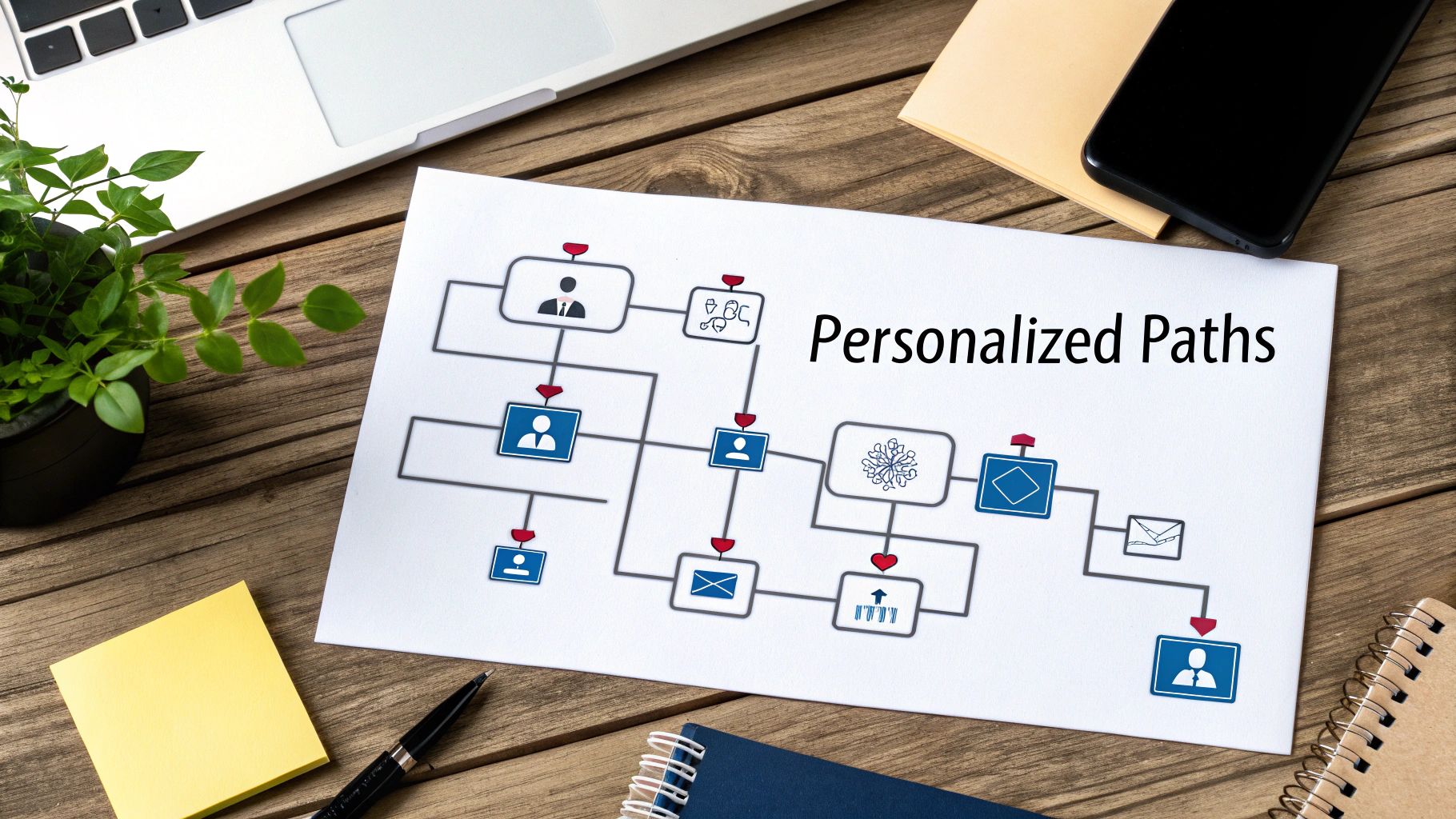
This method moves beyond basic welcome messages to create dynamic customer journeys. For example, a SaaS company might send one track to free trial users who have activated a key feature and a different "re-engagement" track to those who haven't. Platforms like HubSpot and ActiveCampaign have popularized this by building powerful automation tools that make complex segmentation accessible.
How to Build It: A Step-by-Step Plan
- Step 1: Identify Key Segments. Determine the 2-3 most important user groups. Example: For a fitness app, segments could be "Beginner," "Intermediate," and "Advanced."
- Step 2: Gather Data. Use a question on your signup form ("What's your current fitness level?") or track initial in-app actions to automatically segment users.
- Step 3: Create a Unique Path for Each Segment.
- Beginner Track: Focus on foundational tips, motivation, and simple workout guides.
- Advanced Track: Share content on advanced techniques, nutrition optimization, and challenging workouts.
- Step 4: Build the Automation. In your email tool, use "if/then" logic to send users down the correct path based on their segment tag.
A successful segmented sequence significantly increases relevance and conversion. This level of personalization prevents message fatigue and accelerates their journey. You can learn more about the fundamentals by exploring what email segmentation is and how it works on emailgum.com.
Actionable Takeaways
- Start with Core Segments: Don't overcomplicate it initially. Begin by identifying 2-3 primary user groups. For an ecommerce store, this could be "first-time buyers," "repeat customers," and "browsers who abandoned carts."
- Use Data to Define Paths: Collect segmentation data from multiple sources. Use signup form questions to capture initial interests, track website behavior, and create triggers based on email clicks or opens.
- Map Journeys Visually: Before building your automation in a tool like Klaviyo or ConvertKit, create a visual flowchart. This helps you map out the logic, triggers, and content for each path, ensuring a cohesive user experience.
- Leverage Tags Extensively: Use tags to label subscribers based on their actions and attributes. Tags offer a flexible way to create and refine segments over time, allowing for more precise and dynamic personalization as you gather more data.
6. The Storytelling & Narrative Arc Sequence
The Storytelling & Narrative Arc Sequence is a creative onboarding approach that hooks new subscribers by weaving a compelling brand story across multiple emails. Instead of just delivering information, it unfolds a narrative, building an emotional connection and deep reader investment. Each email acts like a chapter, progressing the plot and revealing more about your brand's mission, struggles, and triumphs.
This method transforms your onboarding from a simple checklist into an engaging experience. It’s about making your audience feel like they are part of a journey. Masters of this technique, like Russell Brunson with his ClickFunnels origin story, use personal narratives to connect with the subscriber's own aspirations and challenges, making the brand relatable and memorable. This is one of the most powerful onboarding email sequence examples for building a loyal, emotionally invested audience.
How to Build It: A Step-by-Step Plan
- Email 1: The Inciting Incident. Start with the problem you or your founder faced that led to the creation of your brand. Make it relatable.
- Email 2: The Rising Action. Detail the struggles and failed attempts to solve the problem. This builds empathy.
- Email 3: The "Aha!" Moment. Describe the breakthrough or discovery that changed everything and led to your solution.
- Email 4: The Resolution. Show how this solution (your product) helps others achieve the same success, and invite the reader to join the journey.
Actionable Takeaways
- Start with a Relatable Struggle: Begin your story not with success, but with a vulnerable, relatable challenge. This establishes an immediate connection and makes the eventual triumph more impactful. Share the moment you hit rock bottom or faced a seemingly insurmountable obstacle.
- Create Cliffhangers and Hooks: End each email with a hook or a question that piques curiosity for the next installment. A simple "Tomorrow, I'll tell you about the one piece of advice that changed everything..." can dramatically increase open rates for the next email in the sequence.
- Weave in Value Naturally: Your story should not just entertain; it must also educate. Integrate key lessons, "aha" moments, and actionable tips into the narrative. The value you provide should feel like a natural part of the story's progression, not a forced sales pitch.
- Connect Your Story to Theirs: The ultimate goal is to make your story relevant to the subscriber. Explicitly connect the lessons from your journey to their potential success. Frame your product or service as the tool or guide that will help them overcome their own challenges and achieve their desired transformation.
7. The Interactive & Gamified Onboarding Sequence
The Interactive & Gamified Onboarding Sequence transforms a traditionally passive experience into an active, engaging journey. This modern approach embeds interactive elements like quizzes, polls, surveys, and progress-based challenges directly into the emails. Its primary goal is to boost user participation, make the learning process fun, and gather valuable data for deep personalization from the very first interaction.
This strategy capitalizes on the human desire for engagement and feedback. It moves beyond simply telling users what to do and instead invites them to play an active role in their own onboarding. Brands like Spotify, with their music taste quizzes, and Birchbox, with their personalization quiz sequences, use this to create a more memorable and effective welcome, making it a powerful model for many onboarding email sequence examples.
How to Build It: A Step-by-Step Plan
- Email 1: The Personalization Quiz. Ask a few simple questions to understand the user's goals. (e.g., "What's your biggest marketing challenge?").
- Email 2: The Customized Results. Deliver personalized content or product recommendations based on their quiz answers.
- Email 3: The "Choose Your Own Adventure." Present two or three content paths and let them click on the one that interests them most, which tags them for future personalization.
- Email 4: The Progress Check-in. For SaaS, this could be a checklist of key onboarding steps, celebrating what they've completed so far.
Actionable Takeaways
- Make it Fun and Purposeful: The interaction should serve a clear purpose, such as personalizing future content or recommending the right product. BuzzFeed-style personality quizzes or "choose your own adventure" paths work well to gather user preferences in an entertaining way.
- Deliver Immediate Value: Don't make users wait. Provide the results of a quiz, the answer to a poll, or personalized recommendations in the very next email or immediately on-screen. This instant gratification loop encourages further engagement.
- Keep It Simple and Mobile-First: Interactive elements must be incredibly easy to use, especially on mobile devices where most emails are opened. Keep quizzes short (3-5 questions) and use clear, simple calls-to-action to ensure high completion rates.
- Leverage the Data Collected: The true power of this sequence is the data you gather. Use quiz answers and poll results to create hyper-personalized follow-up content, product recommendations, and targeted communication tracks that speak directly to the user's stated needs and interests.
8. The Re-Engagement & Win-Back Sequence
The Re-Engagement & Win-Back Sequence is a proactive strategy designed to reactivate subscribers who have stopped engaging shortly after signing up. While often used for long-term dormant users, applying this sequence within the initial 7-14 days of onboarding is a powerful tactic to prevent early churn and ensure your audience remains active from the very beginning. Its goal is to recapture attention by reminding users of the value they sought when they first subscribed.
This sequence works by identifying new users who haven't opened emails or logged into your platform after the initial welcome series. It then deploys a targeted set of messages using urgency, value propositions, and direct questions to reignite their interest. Brands like Netflix and Spotify excel at this, sending personalized "We miss you" campaigns that highlight new content or offer a special incentive to return, making it a crucial tool in the arsenal of onboarding email sequence examples.
How to Build It: A Step-by-Step Plan
- Trigger: User has not opened the last 3 emails in the welcome sequence OR has not logged in for 7 days.
- Email 1: The Gentle Nudge. Use a subject line like "Is everything okay?" and remind them of the primary benefit they signed up for.
- Email 2: The Value Reminder. Resurface your most valuable piece of content or a key feature they haven't used yet.
- Email 3: The Special Offer. Present a small, time-sensitive incentive to come back, like a 10% discount or a trial extension.
- Email 4: The Feedback Request / Last Chance. Ask for feedback and let them know you'll be reducing email frequency or unsubscribing them if they remain inactive.
Actionable Takeaways
- Segment Based on Inactivity: Trigger this sequence for new subscribers who haven't opened an email or taken a key action (like logging in) within 5-7 days of completing the welcome series. This precision ensures you're targeting the right users at the right time.
- Lead with Empathy and Value: Use subject lines that acknowledge their absence, such as "Is everything okay?" or "Did you miss this?" In the email body, quickly pivot back to the value they're missing out on. Remind them why they signed up.
- Offer a Clear Path Back: Don't just ask them to come back; give them a compelling reason. This could be an extended trial, a small discount, a link to a high-value piece of content, or a feature highlight they may have missed.
- Ask for Feedback: A simple, one-click survey or a question like, "Are these emails still helpful for you?" can provide invaluable insights. It can also prompt a user to update their email preferences instead of unsubscribing, giving you another chance to deliver relevant content.
Master Your Onboarding: A Summary and Your Next Step
We’ve covered 8 powerful onboarding email sequence examples, each designed to turn new subscribers into loyal customers. The key takeaway is that effective onboarding is a strategic, personalized conversation, not a generic monologue. By delivering immediate value, building trust, and guiding users to their "aha!" moment, you set the foundation for long-term success.
Your recommended next step: Choose one sequence type from this article that best fits your business and sketch out a simple 3-email version. If you're starting from scratch, begin with the Welcome Series. If you have a SaaS product, map out the Product-Led Sequence. Don't aim for perfection; aim for progress. Get a basic version live, then use data to refine and improve it over time. This single step will put you far ahead of the competition and on the path to mastering your email marketing.
Ready to turn these examples into reality without the technical headache? The templates and automation workflows in EmailGum are designed to help you build, test, and launch powerful onboarding sequences in minutes. EmailGum provides the intuitive tools you need to implement the very strategies we've discussed today.