Email segmentation is the practice of dividing your email list into smaller, more specific groups—or segments—based on shared characteristics. Instead of sending one generic message to everyone, this strategy allows you to send highly relevant content to each group. In short, it’s about sending the right message to the right people at the right time.
Moving From Broadcasting to Conversation
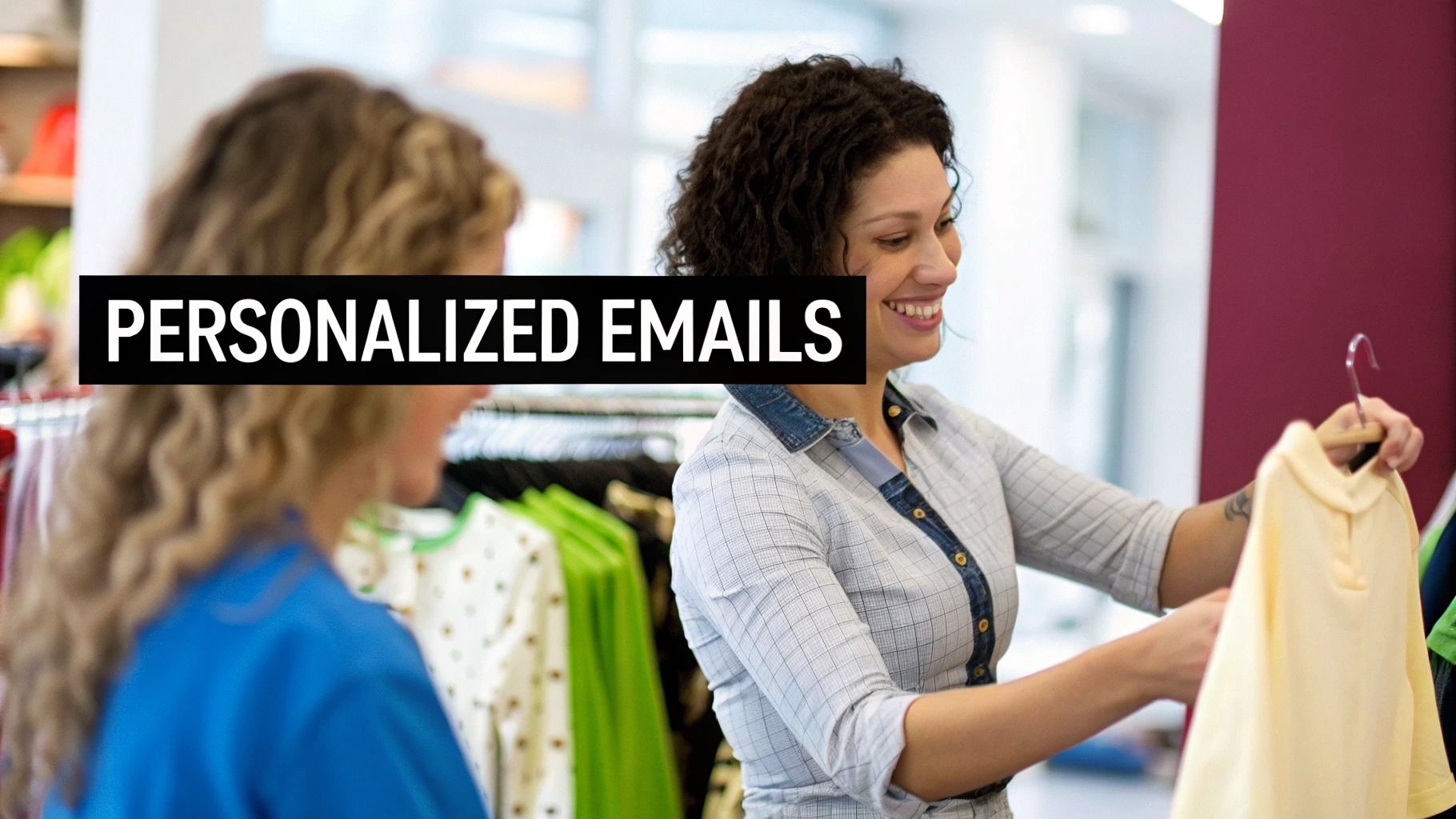
Imagine walking into your favorite store. One clerk shouts the same generic deals at every person who walks in, while another remembers your style and suggests an item they know you'll love. The second experience is personal, helpful, and makes you feel valued.
This is the core difference between old-school email blasts and modern email segmentation. For years, email marketing was a numbers game—a one-way broadcast sent to as many people as possible. Today, that approach falls flat in a crowded inbox.
Email segmentation turns mass communication into a series of meaningful, one-to-one conversations. It's the foundation of effective email marketing that builds loyalty and drives results.
Instead of treating your entire list as a single, faceless entity, segmentation helps you understand the individuals within it. This simple shift in perspective allows you to:
- Deliver Relevant Content: Send messages that align with a subscriber's interests, purchase history, or engagement level.
- Personalize the Experience: Address specific needs and preferences, making subscribers feel understood rather than targeted.
- Strengthen Relationships: Build trust and loyalty by consistently providing value, not just constant sales pitches.
Why This Shift Matters
In a world where personalization is expected, relevance is currency. Consumers are trained to delete messages that don’t immediately capture their attention and speak to their needs. Segmentation is your best tool for cutting through that noise.
By grouping subscribers—for example, by location, past purchases, or how often they open your emails—you can craft messages that resonate deeply. A "we miss you" email for a customer who hasn't purchased in six months feels more personal and is far more effective than a generic weekly newsletter. Ultimately, this is what email segmentation is all about: creating genuine connections that drive meaningful action.
Why Smart Segmentation Drives Real ROI
Email segmentation isn't just a marketing tactic to check off your list; it's the engine that powers real business growth. When you send relevant messages, you stop talking at your audience and start building genuine connections with them. This shift directly moves the needle on your most important metrics and forges lasting customer relationships.
Think about it from a human perspective. We're all wired to tune out irrelevant noise. But when an email lands in our inbox that speaks directly to our needs, interests, or recent actions, we pay attention. This focused communication delivers tangible, bottom-line results that generic email blasts just can't touch.
Sending more relevant emails results in more engagement. And more engagement results in more revenue. It’s a direct line from targeted messaging to a healthier bottom line.
Boosting Engagement and Conversions
When subscribers get content that feels like it was made just for them, they're far more likely to open it, click on a link, and take action. This isn't just a hunch; the data backs it up time and time again.
Segmented campaigns consistently outperform their one-size-fits-all counterparts. The key benefits are clear:
- Higher Open Rates: A subject line that resonates with a specific group is always more compelling than a generic one. We've got a whole guide on other ways you can improve your email open rates.
- Increased Click-Through Rates (CTR): When the offer inside the email matches what a subscriber is interested in—like a discount on a product they just viewed—they’re much more likely to click.
- Lower Unsubscribe Rates: People hit "unsubscribe" when they feel like you're cluttering their inbox. By sending valuable content to each segment, you give them a compelling reason to stick around.
- Significant Lift in Conversions: Ultimately, all this increased engagement leads to more sales, sign-ups, and whatever other actions matter most to your business.
This isn't a minor tweak; it's a fundamental driver of profitability. The sheer scale of email marketing shows how essential smart segmentation has become. Email marketing revenue is projected to grow from $14.8 billion in 2025 to $36.3 billion by 2033. Marketers who get this right are seeing up to $42 in ROI for every $1 spent. It’s no wonder that over 90% of marketers now use segmentation to get better results. You can read the full research on email marketing's economic impact.
Building Stronger Customer Relationships
Beyond the immediate financial wins, smart segmentation is how you build long-term customer loyalty. When you consistently deliver value and show subscribers you understand them as individuals, you build trust.
Think of a customer who gets a personalized birthday offer or a helpful tip based on something they recently bought. They feel seen and appreciated. That positive experience is what turns a one-time buyer into a loyal advocate for your brand, creating a sustainable foundation for growth.
How to Segment Your Audience Effectively
Now that we've covered why segmentation is so powerful, let's get practical. Getting started isn't about creating dozens of complicated rules right away. It's about looking at your audience through four key lenses. Think of these as your segmentation playbook. You can use them on their own or layer them to create hyper-specific groups.
Demographic Segmentation: Who Your Customers Are
This is the most common starting point because it’s straightforward. Demographic segmentation groups people based on objective, statistical information. It answers the simple question: "Who are my subscribers?"
You can usually collect this data easily from sign-up forms or customer account profiles.
Common demographic slices include:
- Age: A skincare brand can send anti-aging product recommendations to its subscribers over 40 and pitch acne solutions to its younger crowd.
- Gender: A clothing store can send menswear promotions to male subscribers and its new dress collection to female subscribers.
- Location: A local concert venue can target subscribers in a specific city or zip code instead of emailing its entire national list about a show in Nashville.
- Income Level: A financial advisor might offer premium investment advice to high-income segments while sending budgeting tips to others.
Behavioral Segmentation: What Actions They Take
This is where your marketing gets truly powerful. Behavioral segmentation is based on tangible actions your subscribers have taken. It answers the question: "What have my subscribers done?"
Instead of guessing what people want, you're responding directly to their demonstrated intent.
Actionable examples include:
- Purchase History: An online shop could create a segment of customers who haven't bought anything in six months and send them a "we miss you" discount to win them back.
- Email Engagement: Create a VIP segment of your most engaged readers—the ones who open and click everything—and reward them with exclusive content or early access to sales.
- Website Activity: A software company might notice a user has visited their pricing page three times this week. That’s a hot lead! Send them a targeted case study to nudge them toward a decision.
- Cart Abandonment: A classic for a reason. Sending a reminder email to shoppers who added items to their cart but didn't check out is a high-return behavioral segment every e-commerce store should use.
To nail this, you need a way to track customer data. A robust CRM system is perfect for this, as it centralizes all the information that fuels your segmentation criteria. The payoff for this kind of smart segmentation is huge, as it directly drives the metrics that matter most.
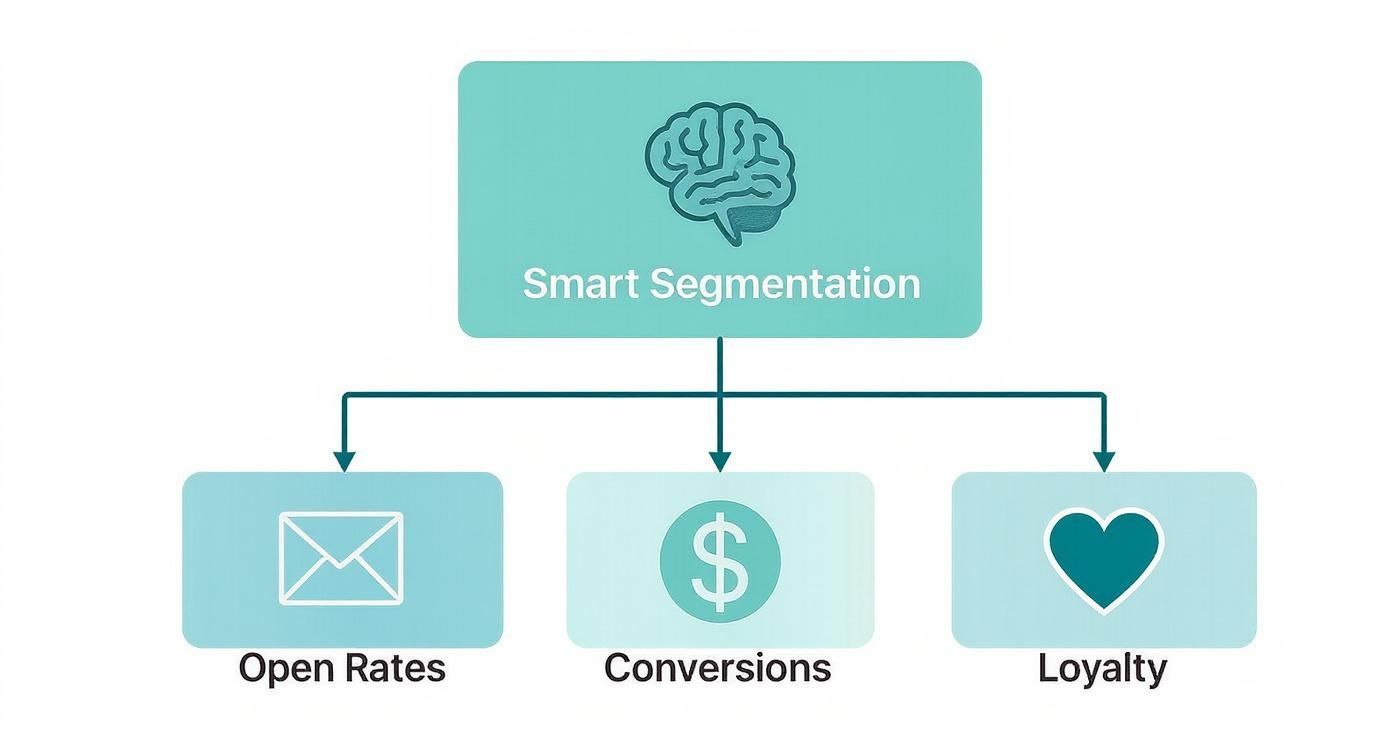
As you can see, good segmentation isn't just another marketing tactic. It's the foundation for higher open rates, better conversions, and customers who stick around for the long haul.
Psychographic And Lifecycle Segmentation
Beyond the who and the what, two other advanced strategies give you even deeper insights into your audience.
Psychographic segmentation digs into the "why" behind what people do. It groups them based on their interests, values, and lifestyle. A travel company, for instance, might create separate segments for "adventure seekers" and "relaxation lovers."
Lifecycle segmentation is all about timing. It looks at where a subscriber is in their relationship with your brand. Are they a brand-new lead, a first-time buyer, a loyal repeat customer, or someone who has gone quiet? Each of these stages needs a completely different conversation.
To make things a bit clearer, here’s a quick breakdown of these four key strategies.
Email Segmentation Strategies at a Glance
| Segmentation Type | Data Used | Example Use Case |
|---|---|---|
| Demographic | Age, gender, location, income, job title | A clothing retailer targeting men in California with an ad for board shorts. |
| Behavioral | Purchase history, email clicks, website visits | A SaaS company sending a tutorial to users who recently tried a new feature. |
| Psychographic | Interests, values, lifestyle, personality traits | A fitness brand sending marathon training tips to subscribers interested in running. |
| Lifecycle | New subscriber, repeat customer, lapsed user | An e-commerce store sending a welcome discount to first-time subscribers. |
Each of these pillars gives you a different piece of the puzzle. The real magic happens when you start layering them, moving from broad demographic groups to highly specific, behavior-triggered messages. This is the heart of true personalization in email marketing, where every email feels like it was written just for the person reading it.
Your Step-by-Step Implementation Plan
Knowing the "what" and "why" of email segmentation is one thing, but putting it into practice is where the real magic happens. Here's a clear, five-step plan to get you started.
Step 1: Define Your Goal
Before you create a single segment, ask yourself: what am I trying to achieve? A segment without a purpose is just a list. Your goal could be to increase repeat purchases, win back inactive subscribers, or drive webinar sign-ups.
Actionable Takeaway: Pick one clear, measurable goal. For example: "Increase the repeat purchase rate from first-time buyers by 15% this quarter."
Step 2: Choose Your Criteria
Once your goal is set, identify the data points that will define your target group. This is where you put the segmentation strategies (demographic, behavioral, etc.) into action.
Goal: Increase repeat purchases.
Criteria: Customers who have purchased exactly once in the last 90 days.
Goal: Re-engage inactive subscribers.
Criteria: Subscribers who have not opened an email in the last 120 days.
Actionable Takeaway: Start with one or two simple criteria. You don't need a complex formula to see results.
Step 3: Collect Your Data
You can't segment without data. The good news is you probably already have plenty. Ensure you are gathering the right information from the start.
Key data sources include:
- Sign-up Forms: Ask for useful info like location or interests right when people subscribe. Using double opt-in is a great way to ensure quality data from the start. Learn what double opt-in is and why it helps.
- Purchase History: Your e-commerce platform or CRM is a goldmine of behavioral data, telling you who bought what, when, and how often.
- Email Engagement: Your email service provider automatically tracks opens, clicks, and other interactions.
Actionable Takeaway: Review your sign-up form. Is there one simple question you could add (e.g., "What are you most interested in?") to improve your data?
Step 4: Build Segments in Your Tool
With your goal, criteria, and data ready, it’s time to build the segment in your email marketing platform. Modern tools like Mailchimp, ConvertKit, or Klaviyo make this easy.
You’ll set up simple rules, like "Subscriber's last purchase date is more than 90 days ago" or "Subscriber's location is New York." The platform then automatically groups everyone who meets your conditions.
Actionable Takeaway: Log into your email tool today and create one simple segment based on a clear criterion, such as "Subscribed in the last 30 days."
Step 5: Launch, Measure, and Refine
Finally, launch your targeted campaign. But the job isn’t done when you hit "send." You must analyze the results. How did your segmented campaign perform compared to your general emails? Keep a close eye on your open rates, click-through rates, and conversions.
The data tells a story. Maybe your "we miss you" campaign needs a more tempting discount, or your welcome series for new subscribers could be more frequent. This continuous cycle of launching, measuring, and tweaking is the secret to mastering email segmentation.
Actionable Takeaway: After sending your first segmented campaign, compare its open rate to your account average. This simple metric will immediately show you the impact of relevance.
Real-World Examples of Great Segmentation
Theory is great, but seeing segmentation in action makes it click. The best brands create genuine experiences, one segment at a time. Let’s look at a few brilliant campaigns to see how they turn data into loyalty.
E-commerce Personalization from Adidas
Adidas has mastered behavioral segmentation. When a customer browses running shoes on their site but doesn't buy, they don't get a generic newsletter. Instead, Adidas sends a follow-up email showcasing those exact shoes, plus a few similar styles.
Segment: Website visitors who showed interest in a specific product category (e.g., running shoes) but did not make a purchase.
The timing is perfect and the message couldn't be more relevant. This simple, behavior-based trigger is a masterclass in turning passive window shopping into active sales.
Travel Deals from Kayak
Travel aggregator Kayak is a pro at combining demographic and behavioral segmentation. They track a user's home base and search history to deliver deals that matter. If you live in Chicago and are always looking up flights to Miami, you won't get an email about cheap fares from Los Angeles to Tokyo. Instead, Kayak sends hyper-targeted alerts for the routes you care about.
- The Strategy: They merge a static demographic data point (home airport) with a dynamic behavioral one (flight search history).
- The Takeaway: Your offers feel less like ads and more like helpful recommendations from a friend who gets you.
Engagement at Scale with Spotify
Spotify's annual "Wrapped" campaign is the champion of behavioral segmentation. They create a deeply personal email and in-app story for millions of users by analyzing individual listening habits.
They treat each person as a segment of one, highlighting their top artists, most-played songs, and total listening time. This campaign is a viral sensation because it forges a powerful emotional connection with the brand. It’s not just data; it’s their data.
These examples prove that the more specific and relevant you are, the better your results will be. In fact, research shows that highly targeted campaigns to narrow segments see significantly higher engagement. You can dig into more stats on how narrow segments improve email responses.
Common Mistakes to Avoid
Jumping into email segmentation is exciting, but a few common mistakes can trip you up. Sidestep these traps to build a strategy that gets results instead of giving you a headache.
The biggest mistake is over-segmenting too quickly. It’s tempting to create dozens of hyper-specific micro-segments, but this often leads to an unmanageable mess. You end up spending more time managing lists than creating value. A segment of three people is rarely worth the effort.
Creating Segments Without a Clear Purpose
Another classic pitfall is building segments just because you can. If you create a segment for "customers who bought a blue shirt on a Tuesday," you must ask: what unique, strategic message can I send them? If you don’t have a good answer, that segment doesn't need to exist.
Every segment you create should have a clear goal. It needs to solve a business problem—whether that’s winning back lapsed customers, upselling recent buyers, or welcoming new subscribers.
Relying on Outdated or Inaccurate Data
Your segments are only as good as the data they're built on. Using old or wrong information leads to sending irrelevant messages—the exact opposite of your goal. A customer who moved from Miami to Denver two years ago doesn't want promotions for your Florida stores.
To keep your data fresh:
- Regularly Clean Your List: Remove subscribers who are completely inactive.
- Update Customer Information: Make it easy for people to update their preferences in their account settings.
- Integrate Your Tools: Ensure your email platform, CRM, and e-commerce site are sharing current data.
Great segmentation is about starting small and being strategic. Begin with a few broad, high-impact segments. Measure their performance, learn from the results, and then refine your approach. This thoughtful process will let you focus on what really matters: delivering genuine value to your audience.
Summary and Your Next Step
Email segmentation is the key to moving from generic broadcasts to personal, effective conversations that build customer loyalty and drive revenue. By dividing your audience based on who they are (demographics), what they do (behaviors), and where they are in their customer journey (lifecycle), you can deliver messages that truly resonate.
Your Recommended Next Step:
Choose just one high-impact segment to focus on this week. A great starting point is "new subscribers" or "first-time customers." Create a single, tailored email campaign specifically for that group and watch how it performs. This one small action is the perfect way to begin mastering email segmentation.
Ready to put these ideas to work? Dive into more of our expert guides and practical tips at EmailGum. Start sending emails that get results.
Visit EmailGum to keep learning.